
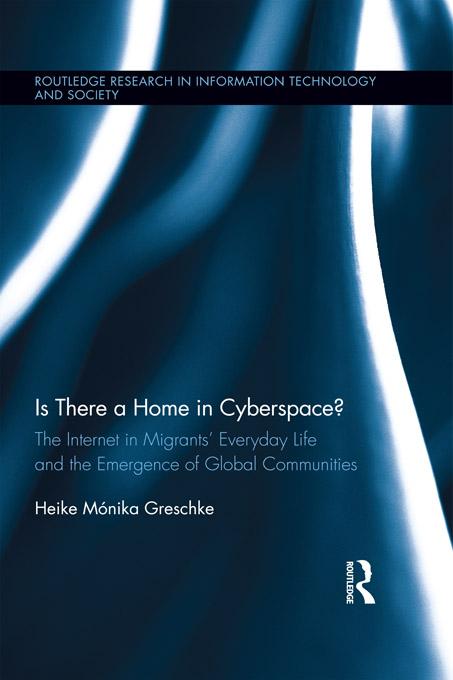
How is global togetherness possible? How does the availability of the Internet alter migrants' everyday lives and senses of belonging? This book introduces an 'alien people' inhabiting a specific common virtual space in the World Wide Web, while the members of this space - most of them ethnic Paraguayans - are physically located in many different parts of the world.
By developing an innovative and 'uniquely adequate' set of research methods, the author explores the interrelation of media and migration practices in their own right and sheds light not only on the living conditions of contemporary (Paraguayan) migrants, but also on emerging global forms of living together. The concentration on a single case facilitates an in-depth understanding of contemporary migration practices, cultural meanings of digital media and senses of belonging.
The book discusses empirical data, methods and theoretical concepts in a reflexive writing style, allowing readers to follow the research process, and to learn from its choices and challenges which are rarely visible in most research reports. The reflexive research procedure contributes not only to the understanding of social realities in the light of globalization, but also to an advancement of sociological methods and concepts for researching social phenomena in global landscapes and mediatization.
Betal enkelt med kort, Klarna, Apple Pay eller Google Pay. Ikke fornøyd? Du har alltid 14 dagers angrerett. Les mer i våre vilkår. Har du spørsmål, send oss en e-post på hello@memmo.org.
Memmo gjør det enklere å studere – uansett hvor du er i verden. Hos oss samler du pensumbøker og smarte studieverktøy på ett og samme sted: sammendrag, quizer, podkaster og flashcards. Og så Ted, din studiekompis som svarer på alt du lurer på. Over 50 000 studenter studerer allerede her – bygget for at du skal lære raskere og stresse mindre.