
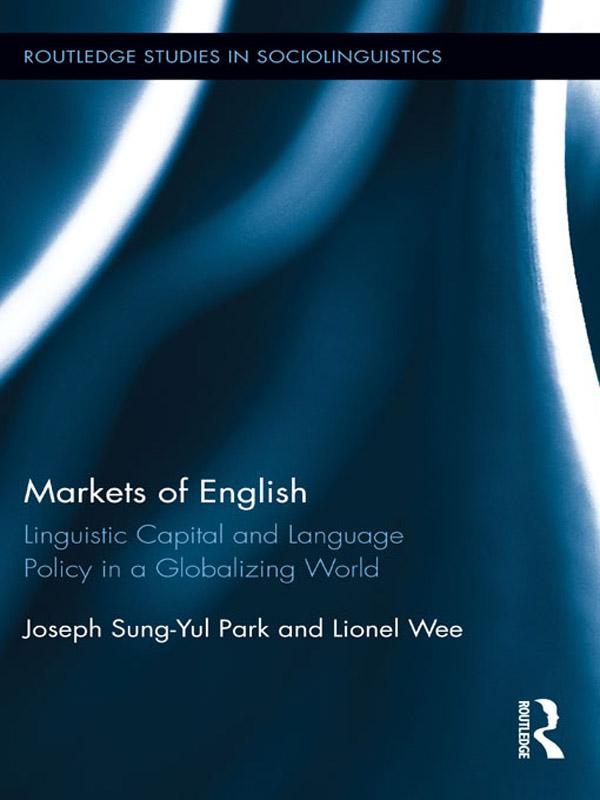
The global spread of English both reproduces and reinforces oppressive structures of inequality. But such structures can no longer be seen as imposed from an imperial center, as English is now actively adopted and appropriated in local contexts around the world. This book argues that such conditions call for a new critique of global English, one that is sensitive to both the political economic conditions of globalization and speakers’ local practices.
Linking Bourdieu’s theory of the linguistic market and his practice-based perspective with recent advances in sociolinguistics and linguistic anthropology, this book offers a fresh new critique of global English. The authors highlight the material, discursive, and semiotic processes through which the value of English in the linguistic market is constructed, and suggest possible policy interventions that may be adopted to address the problems of global English. Through its serious engagement with current sociolinguistic theory and insightful analysis of the multiple dimensions of English in the world, this book challenges the readers to think about what we need to do to confront the social inequalities that are perpetuated by the global spread of English
Betal enkelt med kort, Klarna, Apple Pay eller Google Pay. Ikke fornøyd? Du har alltid 14 dagers angrerett. Les mer i våre vilkår. Har du spørsmål, send oss en e-post på hello@memmo.org.
Memmo gjør det enklere å studere – uansett hvor du er i verden. Hos oss samler du pensumbøker og smarte studieverktøy på ett og samme sted: sammendrag, quizer, podkaster og flashcards. Og så Ted, din studiekompis som svarer på alt du lurer på. Over 50 000 studenter studerer allerede her – bygget for at du skal lære raskere og stresse mindre.