
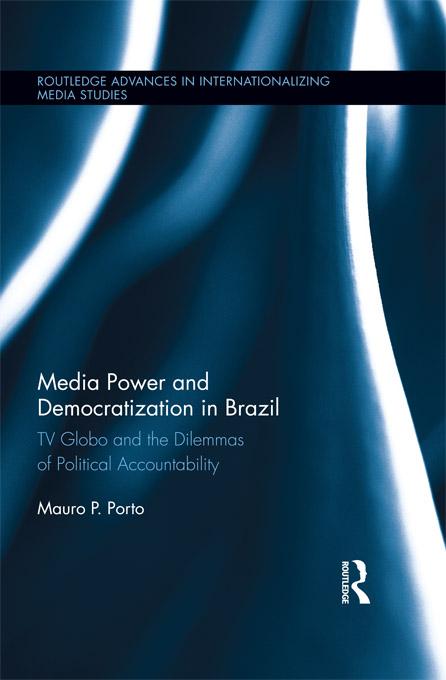
In this book, Porto analyzes the role of TV Globo in the democratization of Brazil. TV Globo, one of the world's largest media conglomerates, has a dominant position in Brazil's communications landscape. It also exports telenovelas to more than 130 countries and has established joint ventures with transnational media conglomerates. Beginning in the mid-1990s, TV Globo began a process of "opening," replacing its authoritarian model of journalism with a more independent reporting style. Representations of Brazil in prime time telenovelas have also shifted. Given this shift, Porto considers some of the following questions:
•What explains these changes in Brazil's most powerful media company?
•How are they related to processes of political and social democratization?
•How did TV Globo's opening affect Brazil's emerging democracy, especially in terms of the quality of political accountability mechanisms?
Porto uses the Brazilian case of TV Globo to analyze the larger links between democratization, civil society mobilization, and media change in transitional societies.
Betal enkelt med kort, Klarna, Apple Pay eller Google Pay. Ikke fornøyd? Du har alltid 14 dagers angrerett. Les mer i våre vilkår. Har du spørsmål, send oss en e-post på hello@memmo.org.
Memmo gjør det enklere å studere – uansett hvor du er i verden. Hos oss samler du pensumbøker og smarte studieverktøy på ett og samme sted: sammendrag, quizer, podkaster og flashcards. Og så Ted, din studiekompis som svarer på alt du lurer på. Over 50 000 studenter studerer allerede her – bygget for at du skal lære raskere og stresse mindre.