
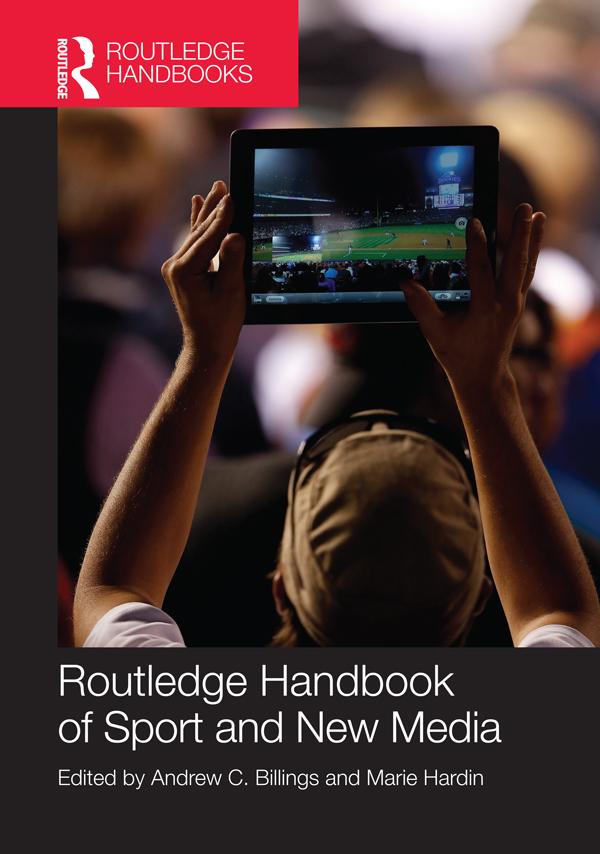
New media technologies have become a central part of the sports media landscape. Sports fans use new media to watch games, discuss sports transactions, form fan-based communities, and secure minutiae about their favorite players and teams. Never before have fans known so much about athletes, whether that happens via Twitter feeds, fan sites, or blogs, and never before have the lines between producer, consumer, enactor, fan and athlete been more blurred. The Internet has made virtually everything available for sports media consumption; it has also made understanding sports media substantially more complex.
The Routledge Handbook of Sport and New Media is the most comprehensive and in-depth study of the impact of new media in sport ever to be published. Adopting a broad, interdisciplinary approach, the book explores new media in sport as a cultural, social, commercial, economic, and technological phenomenon, examining the profound impact of digital technologies on that the way that sport is produced, consumed and understood. There is no aspect of social life or commercial activity in general that is not being radically influenced by the rise of new media forms, and by offering a "state of the field" survey of work in this area, the Routledge Handbook of Sport and New Media is important reading for any advanced student, researcher or practitioner with an interest in sports studies, media studies or communication studies.
Betal enkelt med kort, Klarna, Apple Pay eller Google Pay. Ikke fornøyd? Du har alltid 14 dagers angrerett. Les mer i våre vilkår. Har du spørsmål, send oss en e-post på hello@memmo.org.
Memmo gjør det enklere å studere – uansett hvor du er i verden. Hos oss samler du pensumbøker og smarte studieverktøy på ett og samme sted: sammendrag, quizer, podkaster og flashcards. Og så Ted, din studiekompis som svarer på alt du lurer på. Over 50 000 studenter studerer allerede her – bygget for at du skal lære raskere og stresse mindre.