
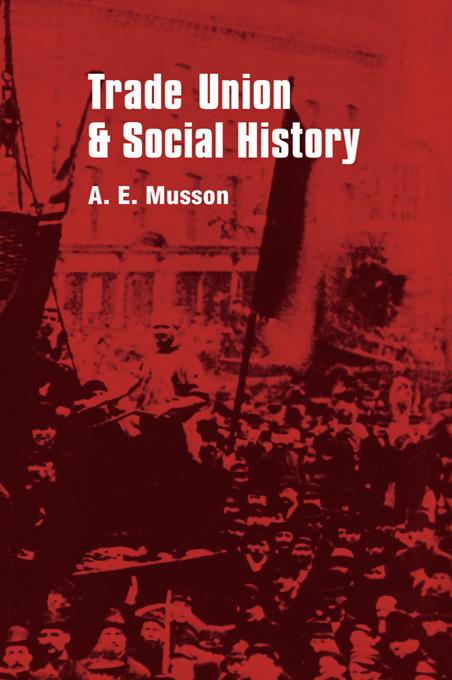
There is perhaps no area of British life where attitudes are more strongly influenced by shared traditions and past experiences than the trade union movement; the memory of the working-class movements is a long one. It is therefore all the more important in the light of recent events to examine the origins and development of trade-union organization over the decades if we are to understand the unions of today, which have emerged as one of the most crucial and strongest elements in the economy.
This book is the product of twenty years' detailed research and general reflection on the course of trade-union development, and ranges over the whole field of British trade-union history, from the early craft societies to the structure of modern trade unionism. It begins by illuminating the problems associated with researching and writing in this field, and goes on to trace the main trends of trade-union development, linking these with modern trade-union problems.
Betal enkelt med kort, Klarna, Apple Pay eller Google Pay. Ikke fornøyd? Du har alltid 14 dagers angrerett. Les mer i våre vilkår. Har du spørsmål, send oss en e-post på hello@memmo.org.
Memmo gjør det enklere å studere – uansett hvor du er i verden. Hos oss samler du pensumbøker og smarte studieverktøy på ett og samme sted: sammendrag, quizer, podkaster og flashcards. Og så Ted, din studiekompis som svarer på alt du lurer på. Over 50 000 studenter studerer allerede her – bygget for at du skal lære raskere og stresse mindre.