
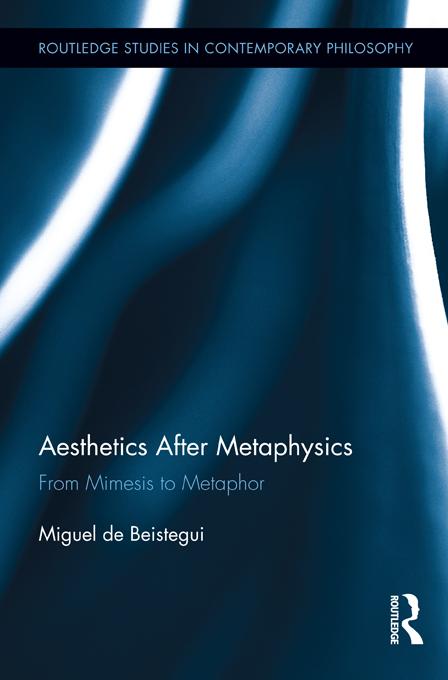
This book focuses on a dimension of art which the philosophical tradition (from Plato to Hegel and even Adorno) has consistently overlooked, such was its commitment – explicit or implicit – to mimesis and the metaphysics of truth it presupposes. De Beistegui refers to this dimension, which unfolds outside the space that stretches between the sensible and the supersensible – the space of metaphysics itself – as the hypersensible and show how the operation of art to which it corresponds is best described as metaphorical. The movement of the book, then, is from the classical or metaphysical aesthetics of mimesis (Part One) to the aesthetics of the hypersensible and metaphor (Part Two). Against much of the history of aesthetics and the metaphysical discourse on art, he argues that the philosophical value of art doesn’t consist in its ability to bridge the space between the sensible and the supersensible, or the image and the Idea, and reveal the sensible as proto-conceptual, but to open up a different sense of the sensible. His aim, then, is to shift the place and role that philosophy attributes to art.
Betal enkelt med kort, Klarna, Apple Pay eller Google Pay. Ikke fornøyd? Du har alltid 14 dagers angrerett. Les mer i våre vilkår. Har du spørsmål, send oss en e-post på hello@memmo.org.
Memmo gjør det enklere å studere – uansett hvor du er i verden. Hos oss samler du pensumbøker og smarte studieverktøy på ett og samme sted: sammendrag, quizer, podkaster og flashcards. Og så Ted, din studiekompis som svarer på alt du lurer på. Over 50 000 studenter studerer allerede her – bygget for at du skal lære raskere og stresse mindre.