
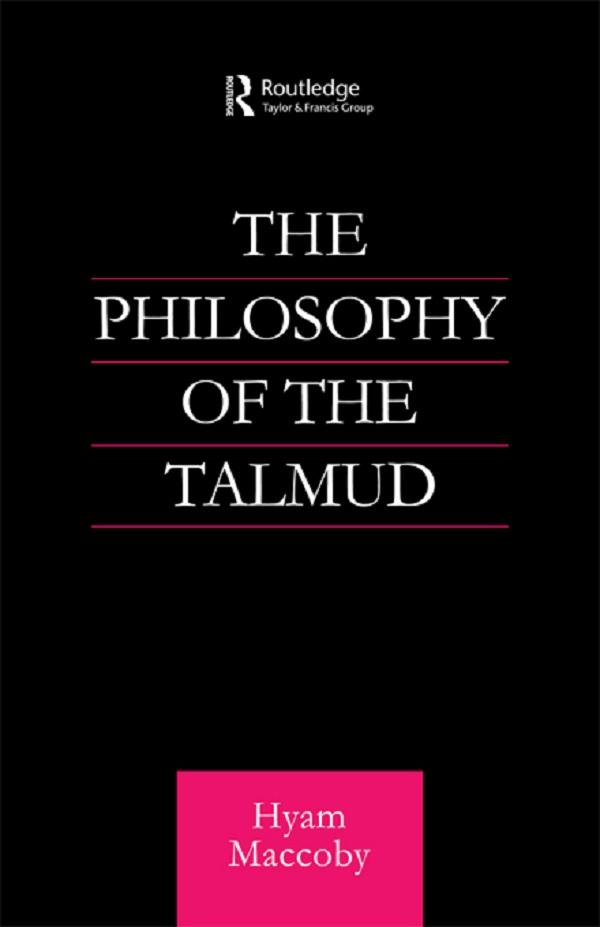
This is a new presentation of the philosophy of the Talmud. The Talmud is not a work of formal philosophy, but much of what it says is relevant to philosophical enquiry, including issues explored in contemporary debates. In particular, the Talmud has original ideas about the relation between universal ethics and the ethics of a particular community. This leads into a discussion on the relation between morality and ritual, and also about the epistemological role of tradition.
The book explains the paradoxes of Talmudic Judaism as arising from a philosophy of revolution, stemming from Jewish origins as a band of escaped slaves, determined not to reproduce the slave-society of Egypt. From this arises a daring humanism, and an emphasis on justice in this world rather than on other-worldly spirituality. A strong emphasis on education and the cultivation of rationality also stems from this. Governing the discussion is a theory of logic that differs significantly from Greek logic. Talmudic logic is one of analogy, not classification and is peculiarly suited to discussions of moral and legal human situations.
This book will be of interest to those in the fields of philosophy, religion and the history of ideas, whether students, teachers and academics, or the interested general reader.
Betal enkelt med kort, Klarna, Apple Pay eller Google Pay. Ikke fornøyd? Du har alltid 14 dagers angrerett. Les mer i våre vilkår. Har du spørsmål, send oss en e-post på hello@memmo.org.
Memmo gjør det enklere å studere – uansett hvor du er i verden. Hos oss samler du pensumbøker og smarte studieverktøy på ett og samme sted: sammendrag, quizer, podkaster og flashcards. Og så Ted, din studiekompis som svarer på alt du lurer på. Over 50 000 studenter studerer allerede her – bygget for at du skal lære raskere og stresse mindre.
Du vil kanskje også like
Kjøp boken0