
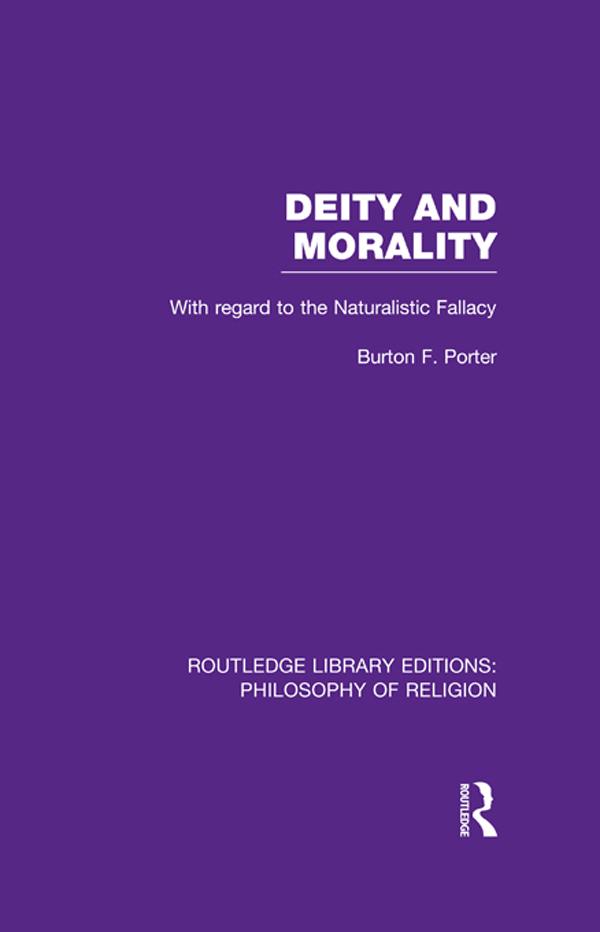
This book describes the "naturalistic fallacy", as attributed to Hume, that non-moral premises cannot logically entail a moral conclusion, and distinguishes it from the similarly named though subtly different fallacy identified by Moore in Principia Ethica by comparing and contrasting its presence in a range of ethical or moral systems. A review of Hume’s position elicits the implications to theological naturalism, and how this relates to Kierkegaard’s "paradox of faith" and the doctrine of ineffability. Methods of logical examination of religious language are discussed, leading to the dissection of the analytic proposition that ‘God is Good’ and of the connotations of proper names. Porter concludes from this a solution to the naturalistic fallacy: that "good" is essential to "God" by definition, and therefore that premises relating to God must contain an inherent morality.
Originally published in 1968, this book includes topics such as Mediaeval attitudes to deity and morality; Religious myth, images and language; Comparative conceptions of deity.
Betal enkelt med kort, Klarna, Apple Pay eller Google Pay. Ikke fornøyd? Du har alltid 14 dagers angrerett. Les mer i våre vilkår. Har du spørsmål, send oss en e-post på hello@memmo.org.
Memmo gjør det enklere å studere – uansett hvor du er i verden. Hos oss samler du pensumbøker og smarte studieverktøy på ett og samme sted: sammendrag, quizer, podkaster og flashcards. Og så Ted, din studiekompis som svarer på alt du lurer på. Over 50 000 studenter studerer allerede her – bygget for at du skal lære raskere og stresse mindre.