
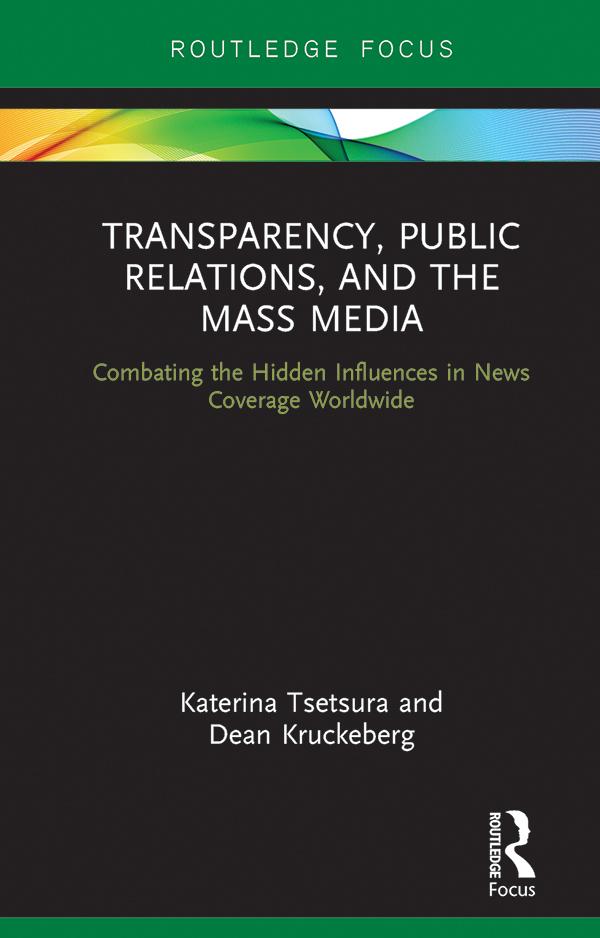
This book is about media transparency and good-faith attempts of honesty by both the sources and the gate-keepers of news and other information that the mass media present as being unbiased. Specifically, this book provides a theoretical framework for understanding media transparency and its antithesis--media opacity--by analyzing extensive empirical data that the authors have collected from more than 60 countries throughout the world. The practice of purposeful media opacity, which exists to greater or lesser extents worldwide, is a powerful hidden influencer of the ostensibly impartial media gate-keepers whose publicly perceived role is to present news and other information based on these gate-keepers’ perception of this information’s truthfulness. Empirical data that the authors have collected globally illustrate the extent of media opacity practices worldwide and note its pervasiveness in specific regions and countries. The authors examine, from multiple perspectives, the complex question of whether media opacity should be categorically condemned as being universally inappropriate and unethical or whether it should be accepted—or at least tolerated—in some situations and environments.
Betal enkelt med kort, Klarna, Apple Pay eller Google Pay. Ikke fornøyd? Du har alltid 14 dagers angrerett. Les mer i våre vilkår. Har du spørsmål, send oss en e-post på hello@memmo.org.
Memmo gjør det enklere å studere – uansett hvor du er i verden. Hos oss samler du pensumbøker og smarte studieverktøy på ett og samme sted: sammendrag, quizer, podkaster og flashcards. Og så Ted, din studiekompis som svarer på alt du lurer på. Over 50 000 studenter studerer allerede her – bygget for at du skal lære raskere og stresse mindre.