
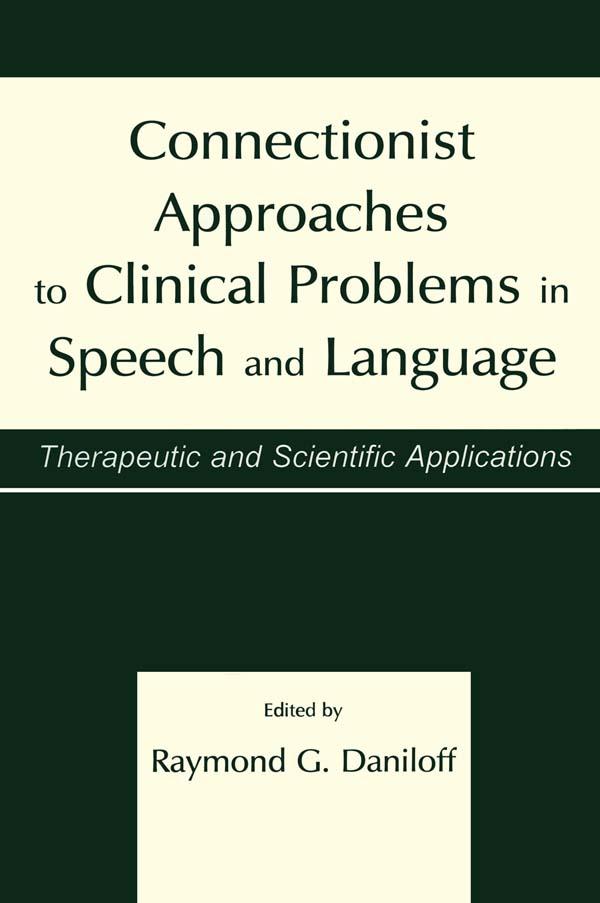
Connectionist accounts of language acquisition, processing, and dissolution proliferate despite attacks from some linguists, cognitive scientists, and engineers. Although the networks of exquisitely interconnected perceptrons postulated by PDP theorists may not be anatomically homologous with actual brain anatomy, a growing body of research suggests that the posited network functions can support many human behaviors. This volume brings together contributors with a variety of backgrounds and perspectives to explore, for the first time, the clinical implications of whole-language connectionist models. Demonstrating that these models are powerful and have explained many phenomena of language acquisition, language therapy, and speech processing, especially at the engineering level, they focus specifically on applications of connectionist theory to delayed language, aphasia, phonological acquisition, and speech perception. Connectionist models, they conclude, offer a new interpretive framework for the discussion of information processing in humans and other animals that will be of great utility to all those who study language and seek to intervene in language disorders.
Betal enkelt med kort, Klarna, Apple Pay eller Google Pay. Ikke fornøyd? Du har alltid 14 dagers angrerett. Les mer i våre vilkår. Har du spørsmål, send oss en e-post på hello@memmo.org.
Memmo gjør det enklere å studere – uansett hvor du er i verden. Hos oss samler du pensumbøker og smarte studieverktøy på ett og samme sted: sammendrag, quizer, podkaster og flashcards. Og så Ted, din studiekompis som svarer på alt du lurer på. Over 50 000 studenter studerer allerede her – bygget for at du skal lære raskere og stresse mindre.