
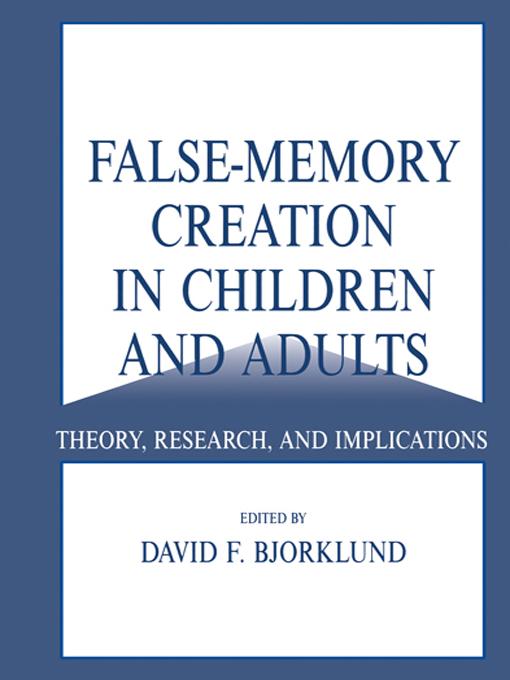
As one of the most hotly debated topics of the past decade, false memory has attracted the interest of researchers and practitioners in many of psychology's subdisciplines. Real-world issues surrounding the credibility of memories (particularly memories of traumatic events, such as sexual abuse) reported by both children and adults have been at the center of this debate. Were the adults actually retrieving repressed memories under the careful direction of psychotherapists, or were the memories being "created" by repeated suggestion? Were children telling investigators about events that actually happened, or were the interviewing techniques used to get at unpleasant experiences serving to implant memories that eventually became their own? There is evidence in the psychological research literature to support both sides, and the potential impact on individuals, families, and society as a whole has been profound.
This book is an attempt to cut through the undergrowth and get at the truth of the "recovered memory/false-memory creation" puzzle. The contributors review seminal work from their own research programs and provide theory and critical evaluation of existing research that is necessary to translate theory into practice. The book will be of great value to basic and applied memory researchers, clinical and social psychologists, and other professionals working within the helping and legal professions.
Betal enkelt med kort, Klarna, Apple Pay eller Google Pay. Ikke fornøyd? Du har alltid 14 dagers angrerett. Les mer i våre vilkår. Har du spørsmål, send oss en e-post på hello@memmo.org.
Memmo gjør det enklere å studere – uansett hvor du er i verden. Hos oss samler du pensumbøker og smarte studieverktøy på ett og samme sted: sammendrag, quizer, podkaster og flashcards. Og så Ted, din studiekompis som svarer på alt du lurer på. Over 50 000 studenter studerer allerede her – bygget for at du skal lære raskere og stresse mindre.