
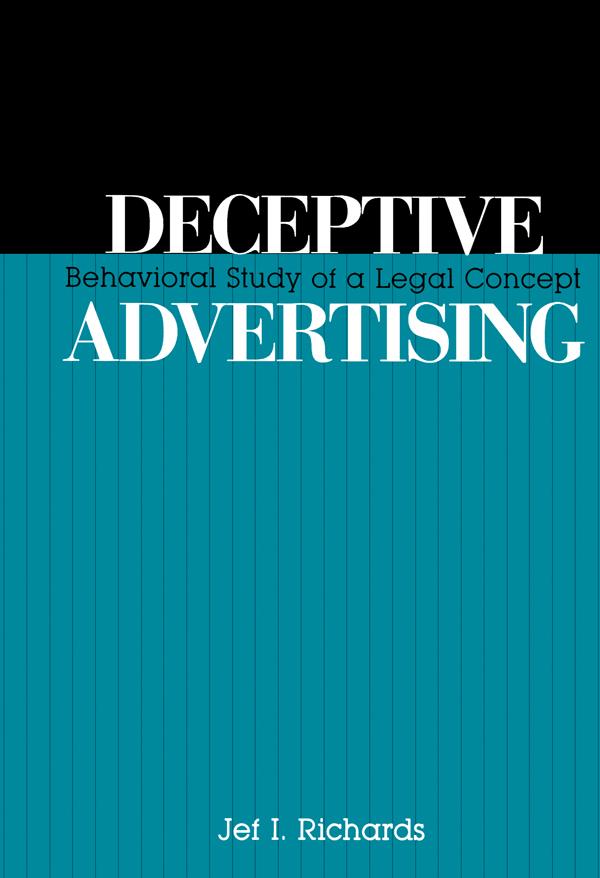
This is the first book designed to assist behavioral scientists in the preparation of scholarly or applied research regarding deceptive advertising which will ultimately affect public policy in this area. Because there was an inadequate foundation upon which to build a program of research for this topic, a three-part solution has been devised:
1) a review of how deception is viewed and regulated
2) a theory of how consumers process deceptive information
3) a sensitive and consistent means of measuring deceptiveness.
This text provides detailed discussions regarding the intersection of law and behavioral science and its application to deceptive advertising. In so doing, it offers a solid foundation upon which to base expanded behavioral research into how consumers are deceived by advertising claims, and what cognitive processes are involved in that deception.
Betal enkelt med kort, Klarna, Apple Pay eller Google Pay. Ikke fornøyd? Du har alltid 14 dagers angrerett. Les mer i våre vilkår. Har du spørsmål, send oss en e-post på hello@memmo.org.
Memmo gjør det enklere å studere – uansett hvor du er i verden. Hos oss samler du pensumbøker og smarte studieverktøy på ett og samme sted: sammendrag, quizer, podkaster og flashcards. Og så Ted, din studiekompis som svarer på alt du lurer på. Over 50 000 studenter studerer allerede her – bygget for at du skal lære raskere og stresse mindre.