
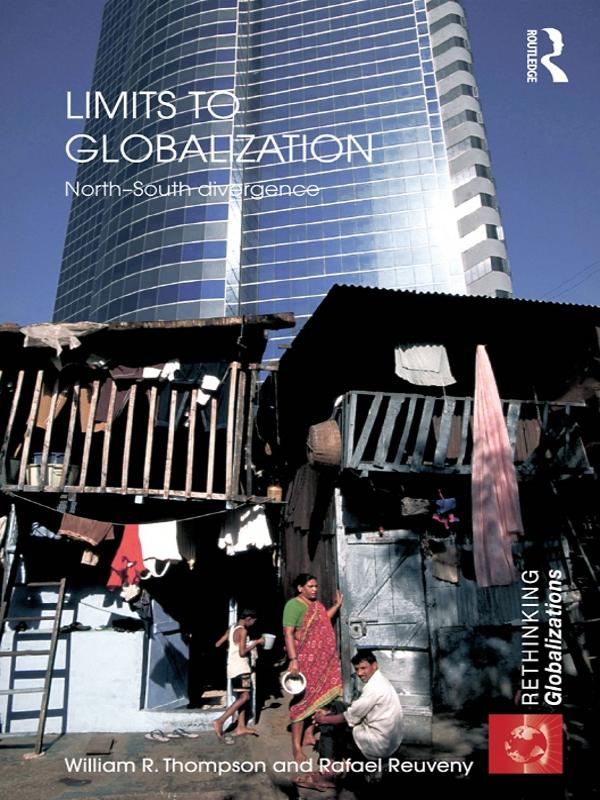
In the post-Cold War era, economic globalization has loomed, at least for some, as the world system's next crisis carrier, creating winners and losers and trampling on the distinctiveness of local cultures. Yet the liberal assumption is that if the market does its job, the poor will catch up to the rich via trade-driven growth and the economies of developed and less developed countries will gradually converge.
Investigating the processes of economic globalization, this book explores whether it is truly a "global" process. It examines how globalization is experienced around the world, comparing its intensity and impact in both the global North and South. Using a world systems approach and developing a theoretical analysis that builds on the leadership long-cycle approach to global political economy, this book seeks to dispel some of the myths widely propagated regarding economic development. Through a focus on the issues of technological diffusion, debt, conflict, and democratisation, the authors demonstrate how and why the asymmetries that have characterized the global North and South in the past and present are growing more acute.
This important book will be of interest to students and scholars of international political economy, globalisation, international trade and development.
Betal enkelt med kort, Klarna, Apple Pay eller Google Pay. Ikke fornøyd? Du har alltid 14 dagers angrerett. Les mer i våre vilkår. Har du spørsmål, send oss en e-post på hello@memmo.org.
Memmo gjør det enklere å studere – uansett hvor du er i verden. Hos oss samler du pensumbøker og smarte studieverktøy på ett og samme sted: sammendrag, quizer, podkaster og flashcards. Og så Ted, din studiekompis som svarer på alt du lurer på. Over 50 000 studenter studerer allerede her – bygget for at du skal lære raskere og stresse mindre.