
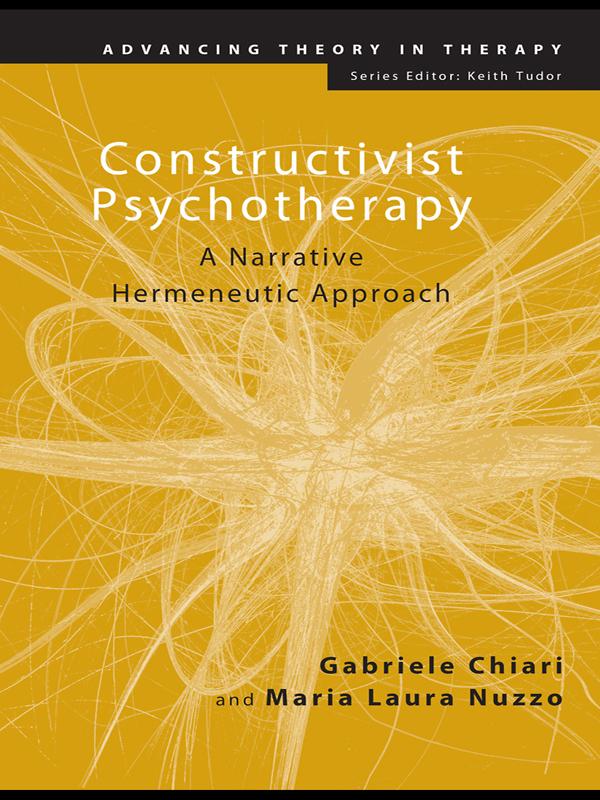
Psychotherapy has undergone major changes in recent years, with a variety of new approaches including cognitive-behavioural therapy joining the more traditional and widespread schools of thought. These new approaches all share the epistemological assumption of constructivism, which states that there are alternative ways of looking at events and that we interpret events according to how we see the world.
Constructivist Psychotherapy reviews the constructivist trends in psychotherapy which link these new approaches, allowing the reader to enter an entirely new dialogue. The book traces constructivist thought, elaborating on Kelly’s personal construct theory and the implications for psychotherapeutic theory and practice.
Areas of discussion include:
- the therapist’s understanding of the client’s narrative
- a constructivist understanding of the person
- psychological constructivism and constructivist trends in psychotherapy
Setting constructivist psychotherapy within its therapeutic, social and philosophical context and using case studies throughout, the book revisits 'Kellian' ideas and theories, bringing them up to date, to explore what it is to be a constructivist psychotherapist today. As such this book will be of interest to all psychotherapists, as well as anyone with an interest in the psychotherapeutic field.
Betal enkelt med kort, Klarna, Apple Pay eller Google Pay. Ikke fornøyd? Du har alltid 14 dagers angrerett. Les mer i våre vilkår. Har du spørsmål, send oss en e-post på hello@memmo.org.
Memmo gjør det enklere å studere – uansett hvor du er i verden. Hos oss samler du pensumbøker og smarte studieverktøy på ett og samme sted: sammendrag, quizer, podkaster og flashcards. Og så Ted, din studiekompis som svarer på alt du lurer på. Over 50 000 studenter studerer allerede her – bygget for at du skal lære raskere og stresse mindre.