
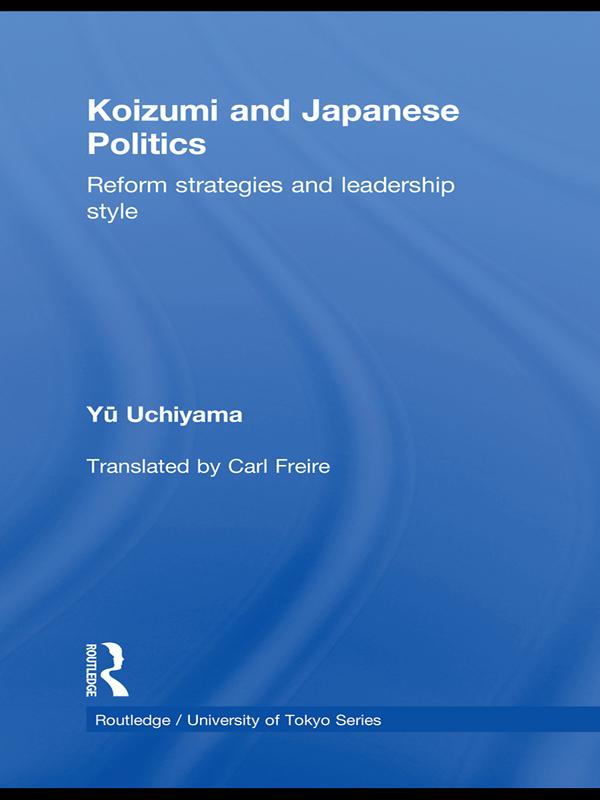
This book offers an empirical and theoretical study of the Koizumi administration, covering such issues as the characteristics of its political style, its domestic and foreign policies, and its larger historical significance. The key questions that guide its approach are: what enabled Koizumi to exercise unusually strong leadership, and what structural transformations of Japanese politics did he achieve?
Uchiyama looks at policy-making processes, newly created institutional arenas such as the Council on Economic and Fiscal Policy, Koizumi’s populist strategy, foreign policy, and neo-liberal convictions to assess the historical significance of his administration and seek out the basis for its wide public support.
Finally, the book undertakes a normative evaluation of the merits and demerits of the Koizumi administration’s political style, and compares it with the Abe and Fukuda administrations that came after. This book will be of interest to scholars and students with an interest in comparative politics, administrative reform, and contemporary Japan.
Betal enkelt med kort, Klarna, Apple Pay eller Google Pay. Ikke fornøyd? Du har alltid 14 dagers angrerett. Les mer i våre vilkår. Har du spørsmål, send oss en e-post på hello@memmo.org.
Memmo gjør det enklere å studere – uansett hvor du er i verden. Hos oss samler du pensumbøker og smarte studieverktøy på ett og samme sted: sammendrag, quizer, podkaster og flashcards. Og så Ted, din studiekompis som svarer på alt du lurer på. Over 50 000 studenter studerer allerede her – bygget for at du skal lære raskere og stresse mindre.