
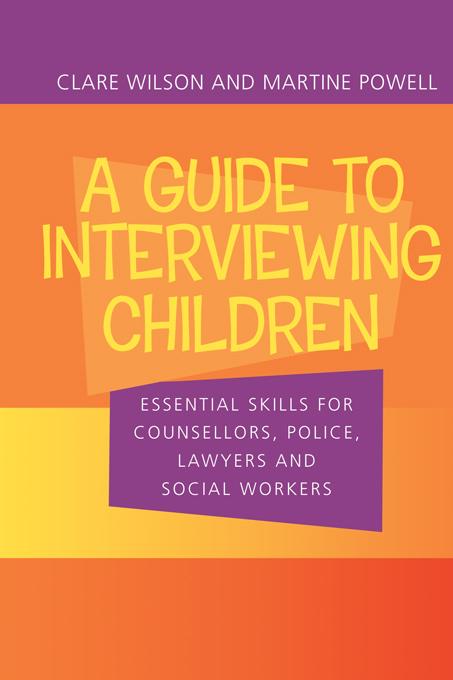
Children may be witnesses to crimes or accidents, or suspected victims of abuse or neglect, or they may be involved in some form of legal action such as custody cases. In these situations, they may need to be interviewed formally, and if this is not done properly, incorrect or inadequate information may be recorded or the child's position may not be correctly represented later in court. In cases of child abuse, the child may not be the only witness, and the quality of their verbal evidence is critical.
A Guide to Interviewing Children is a practical guide the evidential interviewing techniques needed by a range of professionals: social workers, forensic psychologists, lawyers, police and teachers. It outlines basic techniques, explains how to deal with children of different ages (from pre-school to fifteen years), how to deal with parents, the particular issues of sexual abuse, handling multiple interviews of one child and so on. It is written for an international readership, and will be more practical and cover a broader range of contexts than the other titles currently available.
Betal enkelt med kort, Klarna, Apple Pay eller Google Pay. Ikke fornøyd? Du har alltid 14 dagers angrerett. Les mer i våre vilkår. Har du spørsmål, send oss en e-post på hello@memmo.org.
Memmo gjør det enklere å studere – uansett hvor du er i verden. Hos oss samler du pensumbøker og smarte studieverktøy på ett og samme sted: sammendrag, quizer, podkaster og flashcards. Og så Ted, din studiekompis som svarer på alt du lurer på. Over 50 000 studenter studerer allerede her – bygget for at du skal lære raskere og stresse mindre.