
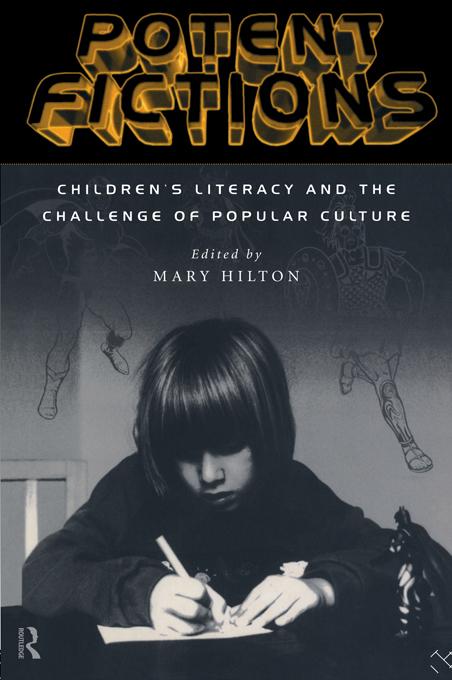
Today's children spend more time than ever before watching television, playing computer games and reading comic and pulp fiction. Many of these are directly designed by the toy and media industry. Are children therefore simply being manipulated?
There is widespread concern that because of these kinds of popular fiction, children do not read `quality' literature, resulting in lower standards of literacy. There is also the further fear that because many of these popular media portray highly stereotyped, gendered images, this too will have a damaging effect on children.
Mary Hilton's fascinating book proves that there is another side to the argument. We do not have to view popular culture as a threat to our children or their education. The writers of this collection show how, used carefully alongside other types of literature, popular culture can actually help teachers to develop literacy in a broad and positive sense.
Betal enkelt med kort, Klarna, Apple Pay eller Google Pay. Ikke fornøyd? Du har alltid 14 dagers angrerett. Les mer i våre vilkår. Har du spørsmål, send oss en e-post på hello@memmo.org.
Memmo gjør det enklere å studere – uansett hvor du er i verden. Hos oss samler du pensumbøker og smarte studieverktøy på ett og samme sted: sammendrag, quizer, podkaster og flashcards. Og så Ted, din studiekompis som svarer på alt du lurer på. Over 50 000 studenter studerer allerede her – bygget for at du skal lære raskere og stresse mindre.
Du vil kanskje også like
Kjøp boken0