
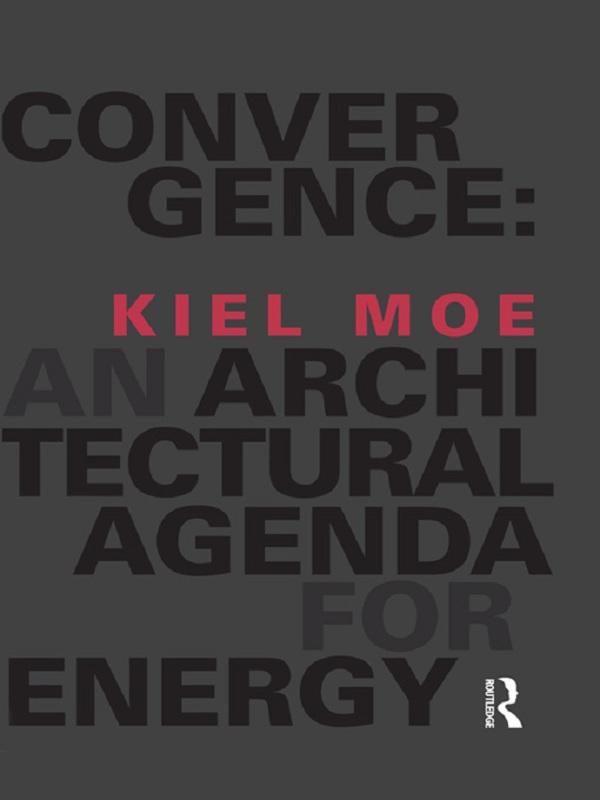
Convergence is based on the thermodynamic premise that architecture should maximize its ecological and architectural power. No matter how paradoxical it might initially seem, architects should maximize energy intake, maximize energy use, and maximize energy feedback and reinforcement. This presumes that the necessary excess of architecture is in fact an architect’s greatest asset when it comes to an agenda for energy, not a liability.
But how do we start to understand the full range of eco-thermodynamic principles which need to be engaged with in order to achieve this?
Kiel Moe explicates three factors: materials, energy systems and amortization. When these three factors converge through design, the resulting buildings begin to perform in complex, if not subtle, ways.
By drawing on a range of architectural, thermodynamic, and ecological sources as well as illustrated and well-designed case studies, the author shows what architecture stands to gain by simultaneously maximizing the architectural and ecological power of buildings.
.
Betal enkelt med kort, Klarna, Apple Pay eller Google Pay. Ikke fornøyd? Du har alltid 14 dagers angrerett. Les mer i våre vilkår. Har du spørsmål, send oss en e-post på hello@memmo.org.
Memmo gjør det enklere å studere – uansett hvor du er i verden. Hos oss samler du pensumbøker og smarte studieverktøy på ett og samme sted: sammendrag, quizer, podkaster og flashcards. Og så Ted, din studiekompis som svarer på alt du lurer på. Over 50 000 studenter studerer allerede her – bygget for at du skal lære raskere og stresse mindre.