
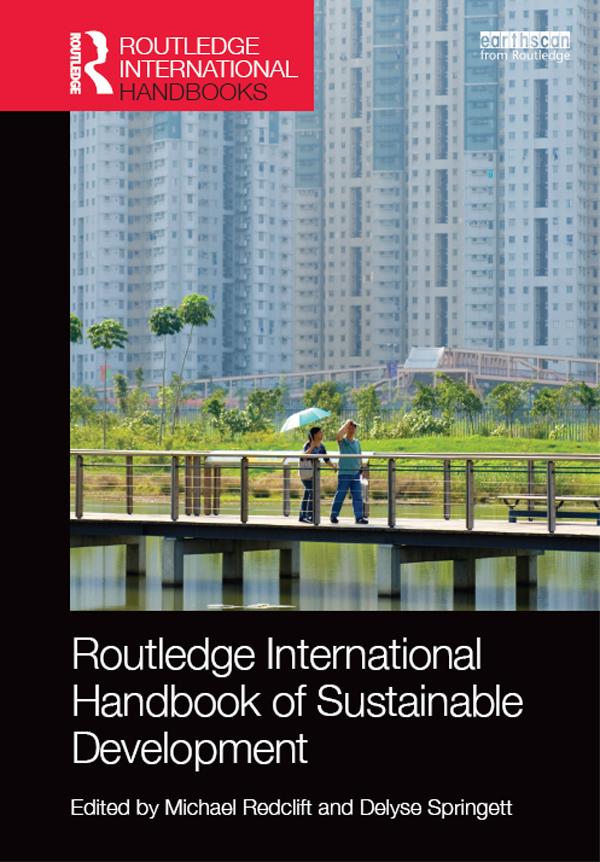
This Handbook gives a comprehensive, international and cutting-edge overview of Sustainable Development. It integrates the key imperatives of sustainable development, namely institutional, environmental, social and economic, and calls for greater participation, social cohesion, justice and democracy as well as limited throughput of materials and energy. The nature of sustainable development and the book’s theorization of the concept underline the need for interdisciplinarity in the discourse as exemplified in each chapter of this volume.
The Handbook employs a critical framework that problematises the concept of sustainable development and the struggle between discursivity and control that has characterised the debate. It provides original contributions from international experts coming from a variety of disciplines and regions, including the Global South.
Comprehensive in scope, it covers, amongst other areas:
- Sustainable architecture and design
- Biodiversity
- Sustainable business
- Climate change
- Conservation
- Sustainable consumption
- De-growth
- Disaster management
- Eco-system services
- Education
- Environmental justice
- Food and sustainable development
- Governance
- Gender
- Health
- Indicators for sustainable development
- Indigenous perspectives
- Urban transport
The Handbook offers researchers and students in the field of sustainable development invaluable insights into a contested concept and the alternative worldviews that it has fostered.
Betal enkelt med kort, Klarna, Apple Pay eller Google Pay. Ikke fornøyd? Du har alltid 14 dagers angrerett. Les mer i våre vilkår. Har du spørsmål, send oss en e-post på hello@memmo.org.
Memmo gjør det enklere å studere – uansett hvor du er i verden. Hos oss samler du pensumbøker og smarte studieverktøy på ett og samme sted: sammendrag, quizer, podkaster og flashcards. Og så Ted, din studiekompis som svarer på alt du lurer på. Over 50 000 studenter studerer allerede her – bygget for at du skal lære raskere og stresse mindre.