
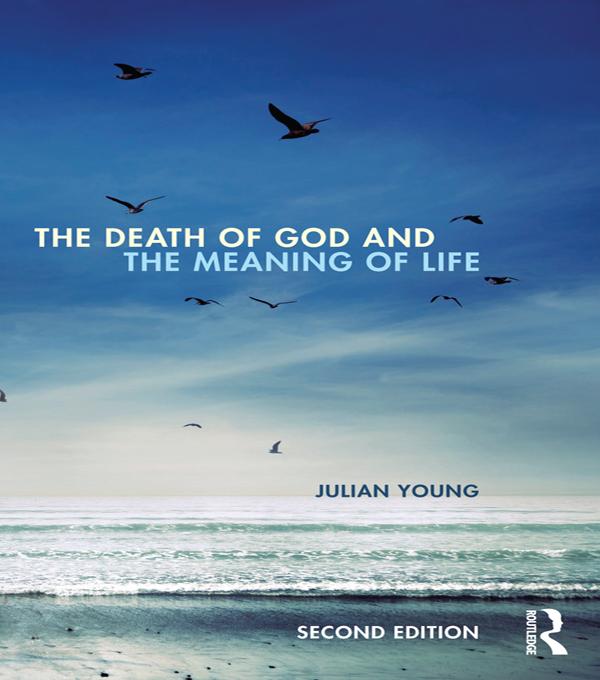
What is the meaning of life? In today's secular, post-religious scientific world, this question has become a serious preoccupation. But it also has a long history: many major philosophers have thought deeply about it, as Julian Young so vividly illustrates in this thought-provoking second edition of The Death of God and the Meaning of Life.
Three new chapters explore Søren Kierkegaard’s attempts to preserve a Christian answer to the question of the meaning of life, Karl Marx's attempt to translate this answer into naturalistic and atheistic terms, and Sigmund Freud’s deep pessimism about the possibility of any version of such an answer. Part 1 presents an historical overview of philosophers from Plato to Marx who have believed in a meaning of life, either in some supposed ‘other’ world or in the future of this world. Part 2 assesses what happened when the traditional structures that give life meaning began to erode. With nothing to take their place, these structures gave way to the threat of nihilism, to the appearance that life is meaningless. Young looks at the responses to this threat in chapters on Nietzsche, Heidegger, Sartre, Camus, Foucault and Derrida.
Fully revised and updated throughout, this highly engaging exploration of fundamental issues will captivate anyone who’s ever asked themselves where life’s meaning (if there is one) really lies. It also makes a perfect historical introduction to philosophy, particularly to the continental tradition.
Betal enkelt med kort, Klarna, Apple Pay eller Google Pay. Ikke fornøyd? Du har alltid 14 dagers angrerett. Les mer i våre vilkår. Har du spørsmål, send oss en e-post på hello@memmo.org.
Memmo gjør det enklere å studere – uansett hvor du er i verden. Hos oss samler du pensumbøker og smarte studieverktøy på ett og samme sted: sammendrag, quizer, podkaster og flashcards. Og så Ted, din studiekompis som svarer på alt du lurer på. Over 50 000 studenter studerer allerede her – bygget for at du skal lære raskere og stresse mindre.