
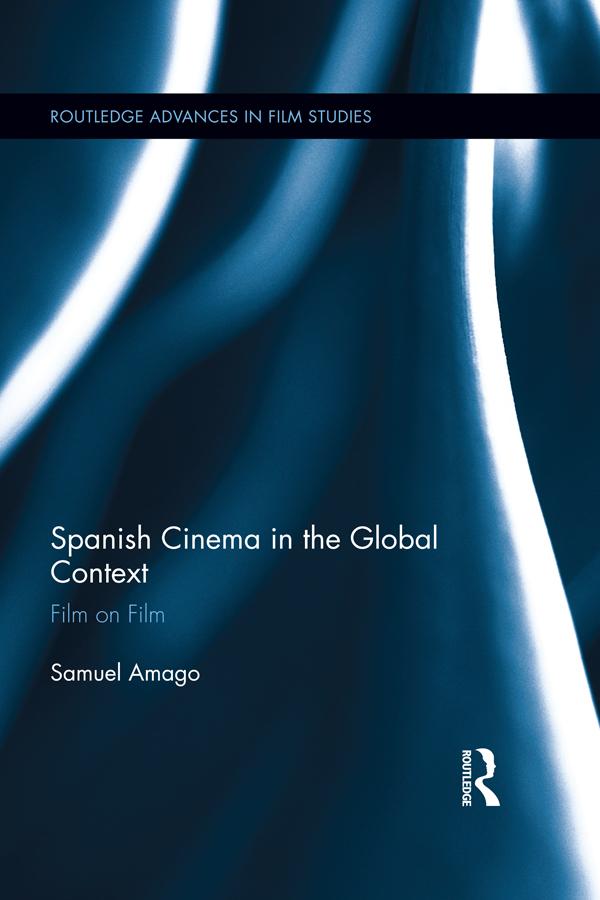
Across a broad spectrum of media, markets, and national contexts, self-reflexivity continues to be a favored narrative mode with wide ranging functions. In this book Amago argues that, in addition to making visible industry and production concerns within the film text, reflexive aesthetics have a cartographic function that serves to map the place of a film (geographic and cultural) within the global cinemascape, and thus to bring into sharper relief images of the national. Focusing on films in the contemporary Spanish context that in some way reflect back on themselves and the processes of their own production, that purposefully blur the distinction between reality and fiction, or that draw attention to the various modes of cinematic exhibition and reception, Amago proposes ways in which these movies can be employed to understand Spanish national cinemas today as imbedded within a dynamic global system.
Betal enkelt med kort, Klarna, Apple Pay eller Google Pay. Ikke fornøyd? Du har alltid 14 dagers angrerett. Les mer i våre vilkår. Har du spørsmål, send oss en e-post på hello@memmo.org.
Memmo gjør det enklere å studere – uansett hvor du er i verden. Hos oss samler du pensumbøker og smarte studieverktøy på ett og samme sted: sammendrag, quizer, podkaster og flashcards. Og så Ted, din studiekompis som svarer på alt du lurer på. Over 50 000 studenter studerer allerede her – bygget for at du skal lære raskere og stresse mindre.