
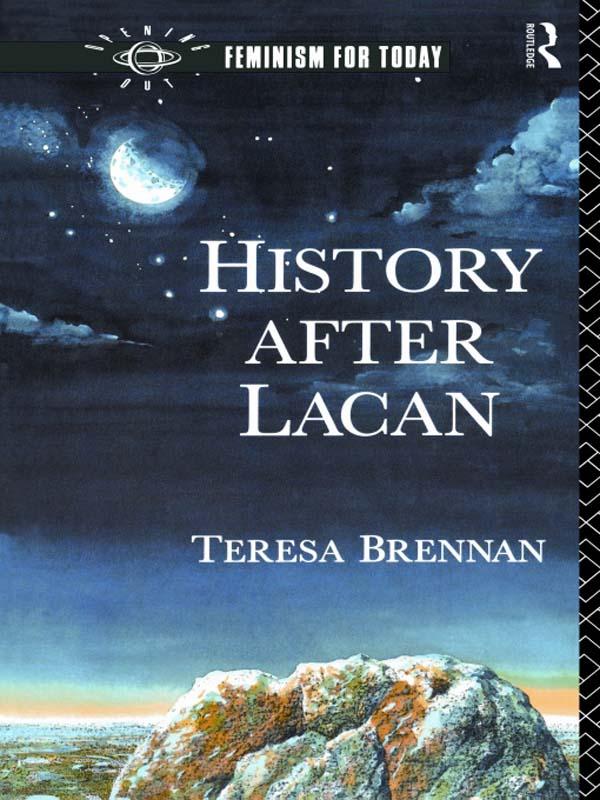
Lacan was not an ahistorical post-structuralist. Starting from this controversial premiss, Teresa Brennan tells the story of a social psychosis. She begins by recovering Lacan's neglected theory of history which argued that we are in the grip of a psychotic's era which began in the seventeenth century and climaxes in the present.
By extending and elaborating Lacan's theory, Brennan develops a general theory of modernity. Contrary to postmodern assumptions, she argues, we need general historical explanation. An understanding of historical dynamics is essential if we are to make the connections between the outstanding facts of modernity - ethnocentrism, the relationship between the sexes and ecological catastrophe.
Betal enkelt med kort, Klarna, Apple Pay eller Google Pay. Ikke fornøyd? Du har alltid 14 dagers angrerett. Les mer i våre vilkår. Har du spørsmål, send oss en e-post på hello@memmo.org.
Memmo gjør det enklere å studere – uansett hvor du er i verden. Hos oss samler du pensumbøker og smarte studieverktøy på ett og samme sted: sammendrag, quizer, podkaster og flashcards. Og så Ted, din studiekompis som svarer på alt du lurer på. Over 50 000 studenter studerer allerede her – bygget for at du skal lære raskere og stresse mindre.
Du vil kanskje også like
Kjøp boken0