
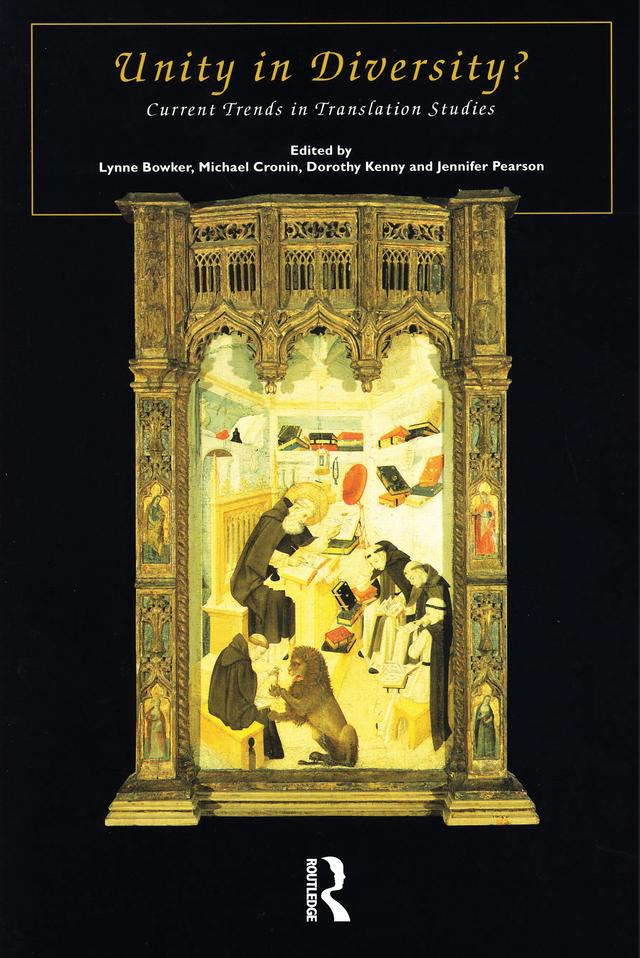
Translation studies as a discipline has grown enormously in recent decades. Contributions to the discipline have come from a variety of fields, including machine translation, history, literature, philosophy, linguistics, terminology, signed language interpreting, screen translation, translation pedagogy, software localization and lexicography. There is evidently great diversity in translation studies, but is there much unity? Have the different branches of translation studies become so specialized that they can no longer talk to each other? Would translation studies be strengthened or weakened by the search for or the existence of unifying principles?
This volume brings together contributions from feminist theory, screen translation, terminology, interpreting, computer-assisted translation, advertising, literature, linguistics, and translation pedagogy in order to counter the tendency to partition or exclude in translation studies. Machine translation specialists and literary translators should be found between the same book covers, if only because the nomadic journeying of concepts is often the key to intellectual discovery and renewal. Celebrating our differences does not mean ignoring what we have in common. Unity in Diversity offers a valuable overview of the current state of translation studies from both theoretical and practical perspectives and makes an important contribution to debates on the future direction of translation studies.
Betal enkelt med kort, Klarna, Apple Pay eller Google Pay. Ikke fornøyd? Du har alltid 14 dagers angrerett. Les mer i våre vilkår. Har du spørsmål, send oss en e-post på hello@memmo.org.
Memmo gjør det enklere å studere – uansett hvor du er i verden. Hos oss samler du pensumbøker og smarte studieverktøy på ett og samme sted: sammendrag, quizer, podkaster og flashcards. Og så Ted, din studiekompis som svarer på alt du lurer på. Over 50 000 studenter studerer allerede her – bygget for at du skal lære raskere og stresse mindre.