
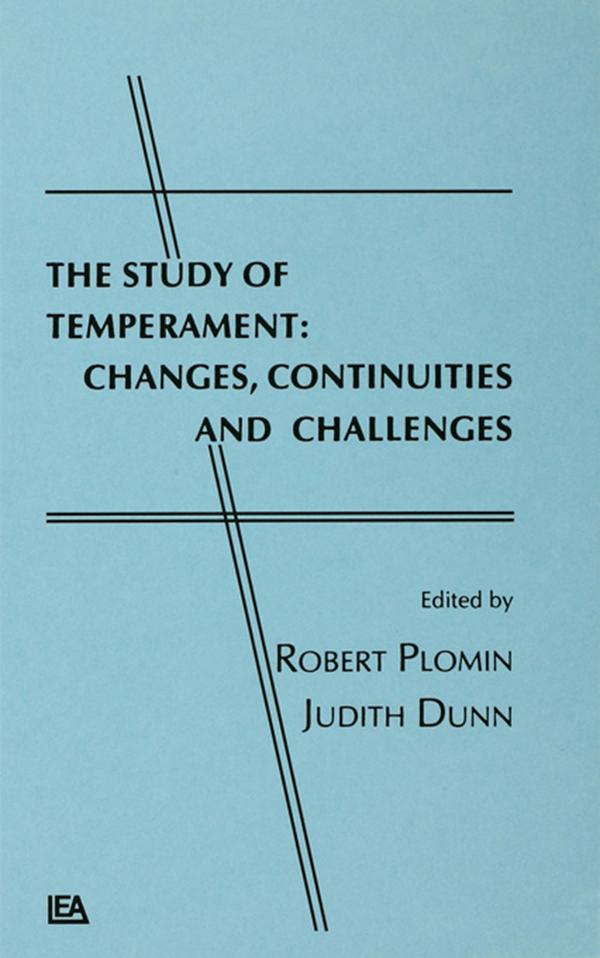
First Published in 1986. The modern history of temperament research began in the late 1950s with the New York Longitudinal Study. Twenty-five years later, temperament has become a major focus of research on early developing emotional and social traits. The impetus for this growth in temperament research stems from the merging of several shifts in child development research: from a view of the child as passive to a model of the child as an active, transacting partner with the environment; increasing interest in individual differences in development; an expansion of research on emotional and social development; and a clear change from an exclusive reliance on environmental explanations of developmental differences to a more balanced perspective that recognizes the possibility of biological as well as environmental influences. Most stimulating is the multidisciplinary flavor of temperament research-clinicians, infancy researchers, cultural anthropologists, and behavioral geneticists have, each for their own reasons, been drawn to the study of temperament. Each of these fields is represented in the present volume, which provides the first overview of the growing field of temperament.
Betal enkelt med kort, Klarna, Apple Pay eller Google Pay. Ikke fornøyd? Du har alltid 14 dagers angrerett. Les mer i våre vilkår. Har du spørsmål, send oss en e-post på hello@memmo.org.
Memmo gjør det enklere å studere – uansett hvor du er i verden. Hos oss samler du pensumbøker og smarte studieverktøy på ett og samme sted: sammendrag, quizer, podkaster og flashcards. Og så Ted, din studiekompis som svarer på alt du lurer på. Over 50 000 studenter studerer allerede her – bygget for at du skal lære raskere og stresse mindre.
Du vil kanskje også like
Kjøp boken0