
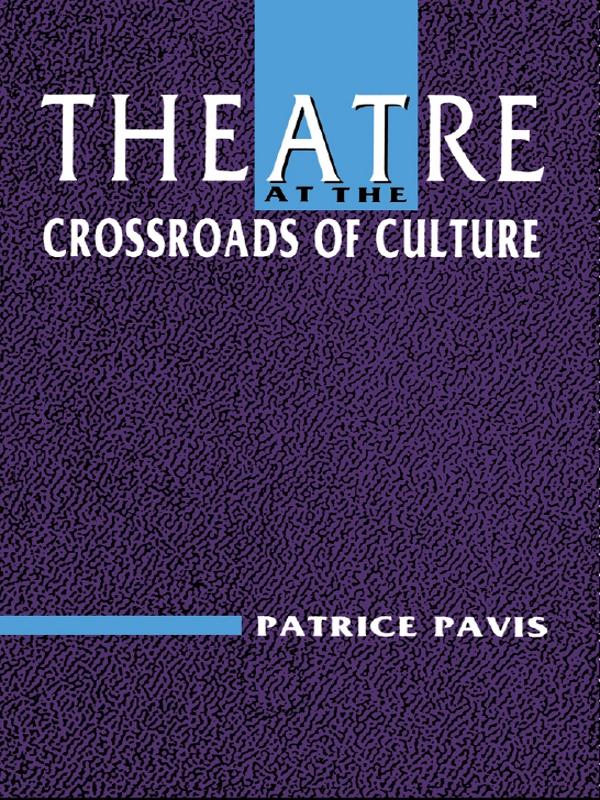
Western culture has a long and fraught history of cultural appropriation, a history that has particular resonance within performance practice. Patrice Pavis asks what is at stake politically and aesthetically when cultures meet at the crossroads of theatre.?
A series of major recent productions are analysed, including Peter Brook's Mahabharata, Cixous/Mnouchkine's Indiande, and Barba's Faust. These focus discussions on translation, appropriation, adaptation, cultural misunderstanding, and theatrical exploration. Never losing sight of the theatrical experience, Pavis confronts problems of colonialism, anthropology, and ethnography. This signals a radical movement away from the director and the word, towards the complex relationship between performance, performer, and spectator.
Despite the problematic politics of cultural exchange in the theatre, interculturalism is not a one-sided process. Using the metaphor of the hourglass to discuss the transfer between source and target culture, Pavis asks what happens when the hourglass is turned upside down, when the `foreign' culture speaks for itself.
Betal enkelt med kort, Klarna, Apple Pay eller Google Pay. Ikke fornøyd? Du har alltid 14 dagers angrerett. Les mer i våre vilkår. Har du spørsmål, send oss en e-post på hello@memmo.org.
Memmo gjør det enklere å studere – uansett hvor du er i verden. Hos oss samler du pensumbøker og smarte studieverktøy på ett og samme sted: sammendrag, quizer, podkaster og flashcards. Og så Ted, din studiekompis som svarer på alt du lurer på. Over 50 000 studenter studerer allerede her – bygget for at du skal lære raskere og stresse mindre.