
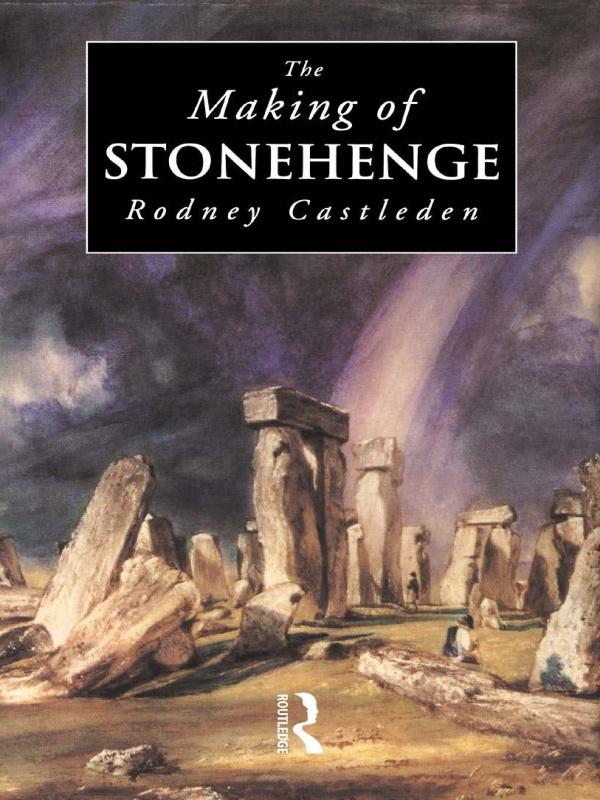
Every generation has created its own interpretation of Stonehenge, but rarely do these relate to the physical realities of the monument. Rodney Castleden begins with those elements which made possible the building of this vast stone circle: the site, the materials and the society that undertook the enormous task of transporting and raising the great vertical stones, then capping them, all to a carefully contrived plan.
What emerges from this detailed examination is a much fuller sense of Stonehenge, both in relation to all the similar sites close by, and in terms of the uses to which it was put. Castleden suggests that there is no one 'meaning' or 'purpose' for Stonehenge, that from its very beginning it has filled a variety of needs. The Romans saw it as a centre of resistance; the antiquaries who 'rediscovered' it in the seventeenth century saw a long line of continuity leading back into the nation's past. The archaeologists see it as a subject for rational, scientific investigation; The National Trust and English Heritage view it as an unfailing magnet for visitors; UNESCO has declared it a World Heritage Site, the cultural property of the whole of humanity. Lost to view amid competing interests over the millenia are the uses it has served for those who live within its penumbra, for whom Stonehenge has never been 'lost' or 'rediscovered'. It exists in local myth and legend, stretching back beyond history.
Betal enkelt med kort, Klarna, Apple Pay eller Google Pay. Ikke fornøyd? Du har alltid 14 dagers angrerett. Les mer i våre vilkår. Har du spørsmål, send oss en e-post på hello@memmo.org.
Memmo gjør det enklere å studere – uansett hvor du er i verden. Hos oss samler du pensumbøker og smarte studieverktøy på ett og samme sted: sammendrag, quizer, podkaster og flashcards. Og så Ted, din studiekompis som svarer på alt du lurer på. Over 50 000 studenter studerer allerede her – bygget for at du skal lære raskere og stresse mindre.
Du vil kanskje også like
Kjøp boken0