
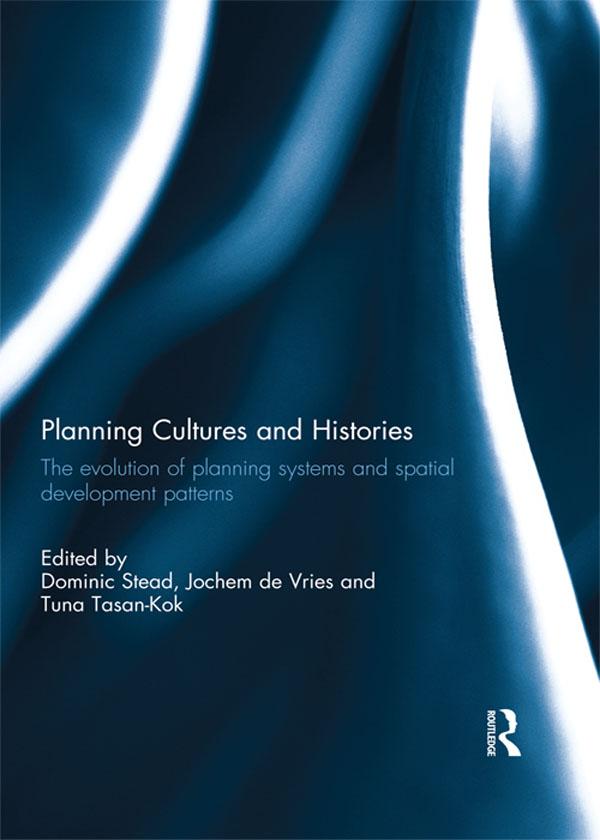
This book addresses the influences of planning cultures and histories on the temporal evolution of planning systems and spatial development. As well as providing an international comparative perspective on these issues, the contributions to the book also engage in a search for new conceptual frameworks and alternative points of view to better understand and explain these differences. The book makes three main academic contributions. First, it catalogues some of the key changes in planning systems and the impact on spatial development patterns. Second, it examines the interrelationship between planning cultures and histories from a path-dependency perspective. Third, it discusses the variations in physical development patterns resulting from different planning cultures and histories. Chapters from different parts of the European continent present evidence at different scales to illustrate these aspects. In all cases, the specific combinations of political, ideological, social, economic and technological factors are important determinants of urban and regional planning trajectories as well as spatial development patterns. This book was previously published as a special issue of European Planning Studies.
Betal enkelt med kort, Klarna, Apple Pay eller Google Pay. Ikke fornøyd? Du har alltid 14 dagers angrerett. Les mer i våre vilkår. Har du spørsmål, send oss en e-post på hello@memmo.org.
Memmo gjør det enklere å studere – uansett hvor du er i verden. Hos oss samler du pensumbøker og smarte studieverktøy på ett og samme sted: sammendrag, quizer, podkaster og flashcards. Og så Ted, din studiekompis som svarer på alt du lurer på. Over 50 000 studenter studerer allerede her – bygget for at du skal lære raskere og stresse mindre.