
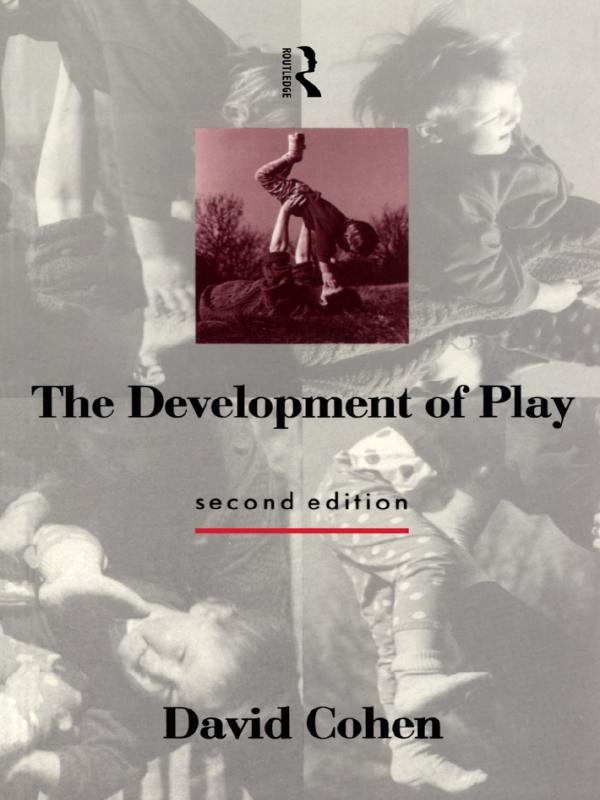
Play is an important part of our development. In playing, we learn to move, think, speak and imagine, as well as cope with other people. This second edition of The Development of Play addresses these key functions that play serves. David Cohen examines how children play with objects, with language, and most importantly, with each other and their parents. He goes on to ask why we stop playing, and looks at adult games. The Development of Play argues that psychology has accepted too uncritically the Victorian opposition of work and play, and argues that adults can learn to play more.
With its extensive account of recent work in this area, this book is the most up-to-date work on the importance of play and will be of interest to child psychologists, developmental psychologists, and a wide number of professionals involved with children.
Betal enkelt med kort, Klarna, Apple Pay eller Google Pay. Ikke fornøyd? Du har alltid 14 dagers angrerett. Les mer i våre vilkår. Har du spørsmål, send oss en e-post på hello@memmo.org.
Memmo gjør det enklere å studere – uansett hvor du er i verden. Hos oss samler du pensumbøker og smarte studieverktøy på ett og samme sted: sammendrag, quizer, podkaster og flashcards. Og så Ted, din studiekompis som svarer på alt du lurer på. Over 50 000 studenter studerer allerede her – bygget for at du skal lære raskere og stresse mindre.