
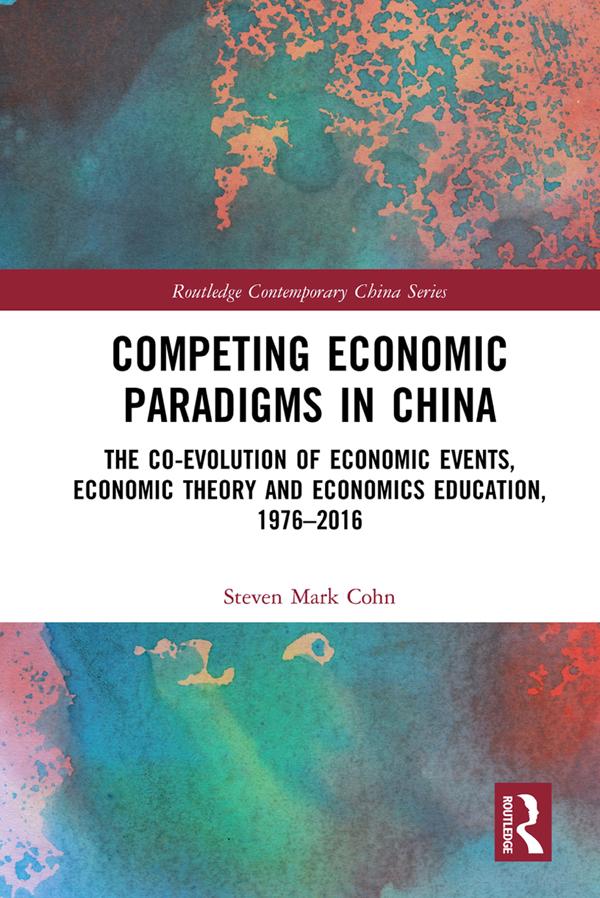
When the Chinese economic reforms began in 1978, Marxist economics infused all the institutions of economic theory in China, from academic departments and economics journals to government departments and economic think tanks. By the year 2000, neoclassical economics dominated these institutions and organized most economic discussion. This book explains how and why neoclassical economic theory replaced Marxist economic theory as the dominant economics paradigm in China. It rejects the idea that the rise of neoclassical theory was a triumph of reason over ideology, and instead, using a sociology of knowledge approach, links the rise of neoclassical economics to broad ideological currents and to the political-economic projects that key social groups inside and outside China wanted to enable. The book concludes with a discussion of the nature of economic theory and economics education in China today.
Betal enkelt med kort, Klarna, Apple Pay eller Google Pay. Ikke fornøyd? Du har alltid 14 dagers angrerett. Les mer i våre vilkår. Har du spørsmål, send oss en e-post på hello@memmo.org.
Memmo gjør det enklere å studere – uansett hvor du er i verden. Hos oss samler du pensumbøker og smarte studieverktøy på ett og samme sted: sammendrag, quizer, podkaster og flashcards. Og så Ted, din studiekompis som svarer på alt du lurer på. Over 50 000 studenter studerer allerede her – bygget for at du skal lære raskere og stresse mindre.
Du vil kanskje også like
Kjøp boken0