
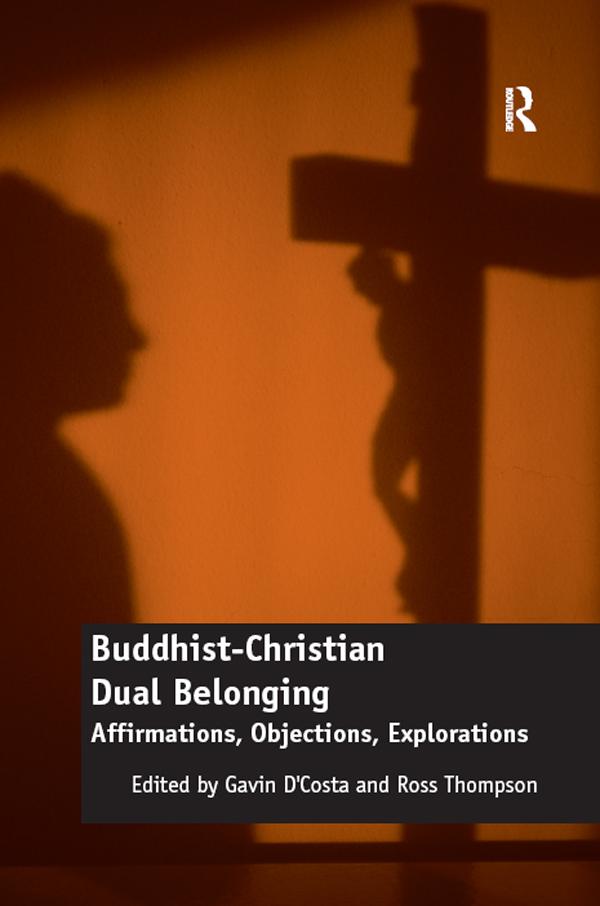
A growing number of people describe themselves as both Buddhist and Christian; but does such a self-description really make sense? Many people involved in inter-faith dialogue argue that this dialogue leads to a mutually transformative process, but what if the transformation reaches the point where the Buddhist or Christian becomes a Buddhist Christian? Does this represent a fulfilment of or the undermining of dialogue? Exploring the growing phenomenon of Buddhist-Christian dual belonging, a wide variety of authors including advocates, sympathisers and opponents from both faiths, focus on three key questions: Can Christian and Buddhist accounts and practices of salvation or liberation be reconciled? Are Christian theism and Buddhist non-theism compatible? And does dual belonging inevitably distort the essence of these faiths, or merely change its cultural expression? Clarifying different ways of justifying dual belonging, contributors offer criticisms of dual belonging from different religious perspectives (Theravada Buddhist, Evangelical Reformed and Roman Catholic) and from different methodological approaches. Four chapters then carry the discussion forward suggesting ways in which dual belonging might make sense from Catholic, Theravada Buddhist, Pure-land Buddhist and Anglican perspectives. The conclusion clarifies the main challenges emerging for dual belongers, and the implications for interreligious dialogue.
Betal enkelt med kort, Klarna, Apple Pay eller Google Pay. Ikke fornøyd? Du har alltid 14 dagers angrerett. Les mer i våre vilkår. Har du spørsmål, send oss en e-post på hello@memmo.org.
Memmo gjør det enklere å studere – uansett hvor du er i verden. Hos oss samler du pensumbøker og smarte studieverktøy på ett og samme sted: sammendrag, quizer, podkaster og flashcards. Og så Ted, din studiekompis som svarer på alt du lurer på. Over 50 000 studenter studerer allerede her – bygget for at du skal lære raskere og stresse mindre.
Du vil kanskje også like
Kjøp boken0