
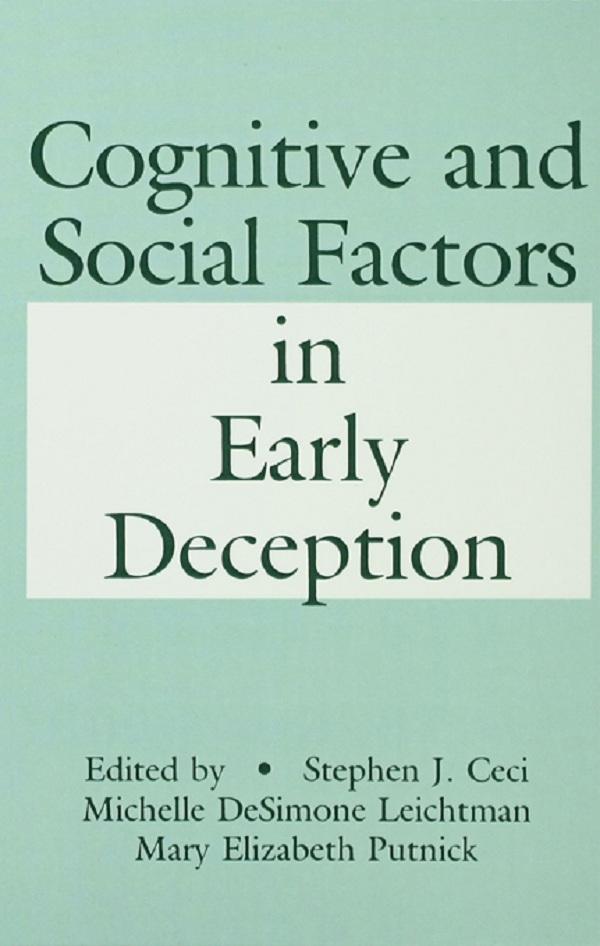
The understanding of early deception is important for both theoretical and practical purposes. Children's deceptive behaviors provide a window into their models and theories of mind. On a practical level, childhood deception poses challenges for the legal system as well as parents and schools.
In this volume, contributors from diverse areas of psychology -- social, cognitive, and developmental -- as well as philosophy and law examine the determinants of deception among preschoolers. In addition to a wealth of new empirical findings dealing with gender, motivation, and context in children's use of deception, evidence is provided for recursivity of awareness in children as young as three years of age. With chapters and commentaries written by leading scholars in the United States, England, and Australia, this book reflects a growing concern with ecological validity in developmental studies and may prompt rethinking of traditional models of mind based exclusively on data from laboratory experiments.
Betal enkelt med kort, Klarna, Apple Pay eller Google Pay. Ikke fornøyd? Du har alltid 14 dagers angrerett. Les mer i våre vilkår. Har du spørsmål, send oss en e-post på hello@memmo.org.
Memmo gjør det enklere å studere – uansett hvor du er i verden. Hos oss samler du pensumbøker og smarte studieverktøy på ett og samme sted: sammendrag, quizer, podkaster og flashcards. Og så Ted, din studiekompis som svarer på alt du lurer på. Over 50 000 studenter studerer allerede her – bygget for at du skal lære raskere og stresse mindre.
Du vil kanskje også like
Kjøp boken0