
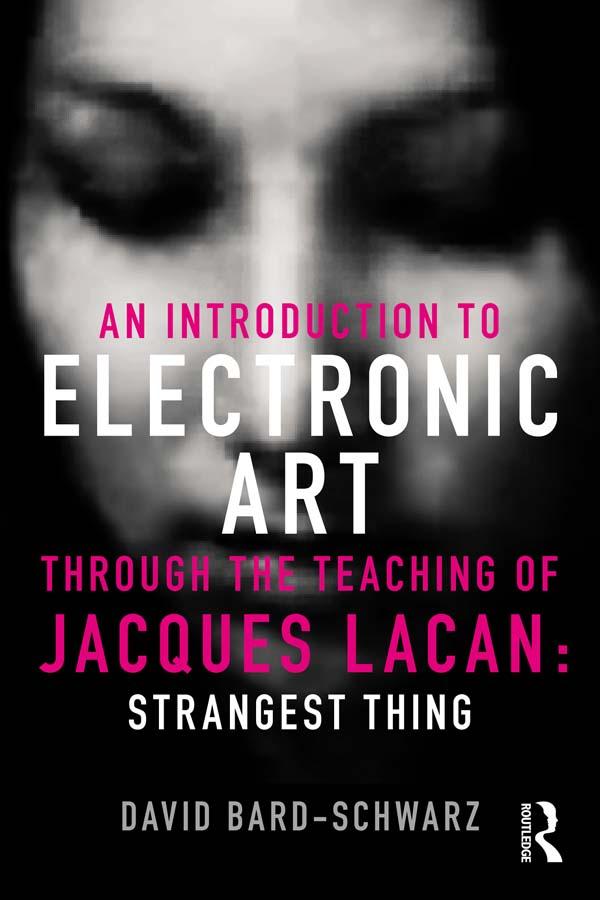
Electronic art offers endless opportunities for reflection and interpretation. Works can be interactive or entirely autonomous and the viewer's perception and reaction to them may be challenged by constantly transforming images. Whether the transformations are a product of the appearances or actions of a viewer in an installation space, or a product of a self-contained computer program, is a source of constant fascination. Some viewers may feel strange or unnerved by a work, while others may feel welcoming, humorous, and playful emotions. The art may also provoke a critical response to social, aesthetic, and political aspects of early twenty-first-century life. This book approaches electronic art through the teachings of Jacques Lacan, whose return to Freud has exerted a powerful and wide-ranging influence on psychoanalysis and critical theory in the twentieth century.
David Bard-Schwarz draws on his experience with Lacanian psychoanalysis, music, and interactive and traditional arts in order to address aspects of the works the viewer may find difficult to understand. Dividing his approach over four thematic chapters—Bodies, Voices, Eyes, and Signifiers—Bard-Schwarz explores the links between works of new media and psychoanalysis (how we process what we see, hear, touch, imagine, and remember).
This is a fascinating book for new media artists and critics, museum curators, psychologists, students in the fine arts, and those who are interested in digital technology and contemporary culture.
Betal enkelt med kort, Klarna, Apple Pay eller Google Pay. Ikke fornøyd? Du har alltid 14 dagers angrerett. Les mer i våre vilkår. Har du spørsmål, send oss en e-post på hello@memmo.org.
Memmo gjør det enklere å studere – uansett hvor du er i verden. Hos oss samler du pensumbøker og smarte studieverktøy på ett og samme sted: sammendrag, quizer, podkaster og flashcards. Og så Ted, din studiekompis som svarer på alt du lurer på. Over 50 000 studenter studerer allerede her – bygget for at du skal lære raskere og stresse mindre.