
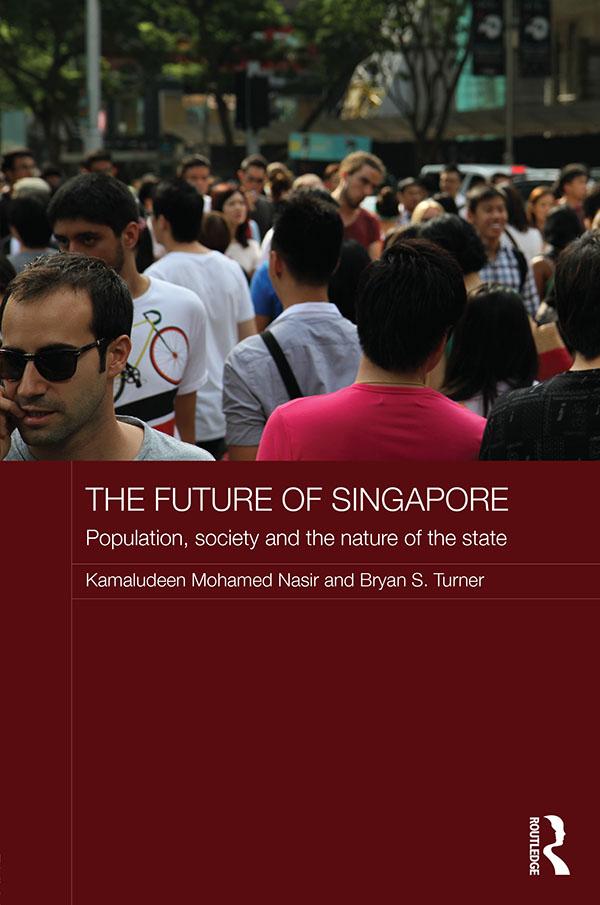
Singapore, like many other advanced economies, has a relatively low, and declining, birth-rate. One consequence of this, and a consequence also of the successful economy, is that migrants are being drawn in, and are becoming an increasing proportion of the overall population. This book examines this crucial development, and assesses its likely impact on Singapore society, politics and the state. It shows that, although Singapore is a multi-ethnic society, migration and the changing ethnic mix are causing increasing strains, putting new demands on housing, education and social welfare, and changing the make-up of the workforce, where the government is responding with policies designed to attract the right sort of talent. The book discusses the growing opposition to migration, and explores how the factors which have underpinned Singapore’s success over recent decades, including a cohesive elite, with a clearly focused ideology, a tightly controlled political system and strong continuity of government, are at risk of being undermined by the population changes and their effects. The book also compares the position in Singapore with other East Asian countries, including Japan, South Korea and the Philippines, which are also experiencing population changes with potentially far-reaching consequences.
Betal enkelt med kort, Klarna, Apple Pay eller Google Pay. Ikke fornøyd? Du har alltid 14 dagers angrerett. Les mer i våre vilkår. Har du spørsmål, send oss en e-post på hello@memmo.org.
Memmo gjør det enklere å studere – uansett hvor du er i verden. Hos oss samler du pensumbøker og smarte studieverktøy på ett og samme sted: sammendrag, quizer, podkaster og flashcards. Og så Ted, din studiekompis som svarer på alt du lurer på. Over 50 000 studenter studerer allerede her – bygget for at du skal lære raskere og stresse mindre.