
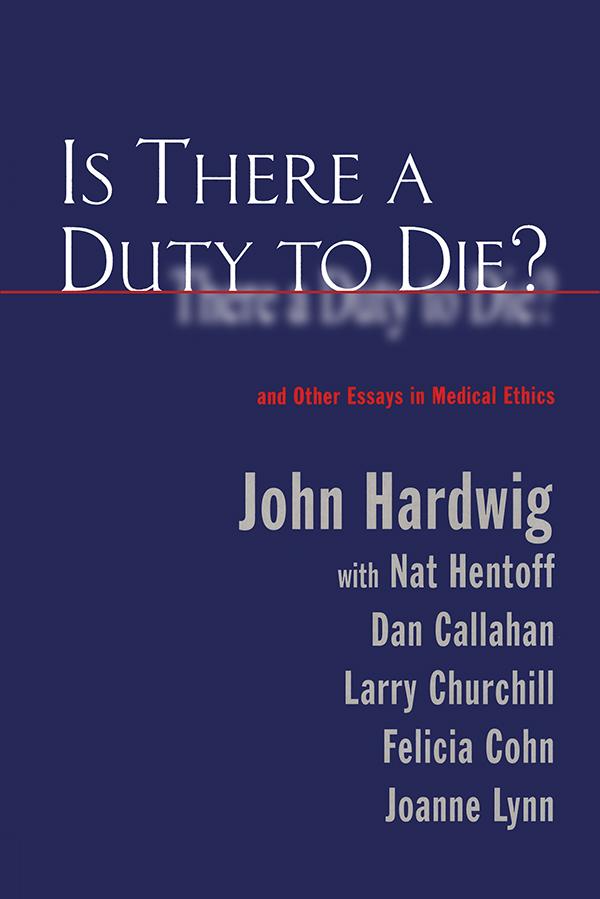
Amid the controversies surrounding physician-assisted suicides, euthanasia, and long-term care for the elderly, a major component in the ethics of medicine is notably absent: the rights and welfare of the survivor's family, for whom serious illness and death can be emotionally and financially devastating. In this collection of eight provocative and timely essays, John Hardwig sets forth his views on the need to replace patient-centered bioethics with family-centered bioethics. Starting with a critique of the awkward language with which philosphers argue the ethics of personal relationships, Hardwig goes on to present a general statement on the necessity of family-centered bioethics. He reflects on proxy decisions, the effects of elder care on the family, the financial and lifestyle consequences of long-term care, and physician-assisted suicide from the perspective of the family. His penultimate essay, Is There a Duty to Die? carries the idea of family-centered ethics to its logical, controversial, conclusion; comments upon this essay from Daniel Callahan, Larry Churchill, Joanne Lynn, and journalist Nat Hentoff offer differing views on this highly charged subject. As advances in medicine prolong patient's lives, the welfare of those ultimately responsible for medical care-the family-must be addressed. Hardwig's courageous and illuminating essays set forth a new direction in bioethics: one that considers the welfare of everyone concerned.
Betal enkelt med kort, Klarna, Apple Pay eller Google Pay. Ikke fornøyd? Du har alltid 14 dagers angrerett. Les mer i våre vilkår. Har du spørsmål, send oss en e-post på hello@memmo.org.
Memmo gjør det enklere å studere – uansett hvor du er i verden. Hos oss samler du pensumbøker og smarte studieverktøy på ett og samme sted: sammendrag, quizer, podkaster og flashcards. Og så Ted, din studiekompis som svarer på alt du lurer på. Over 50 000 studenter studerer allerede her – bygget for at du skal lære raskere og stresse mindre.
Du vil kanskje også like
Kjøp boken0