
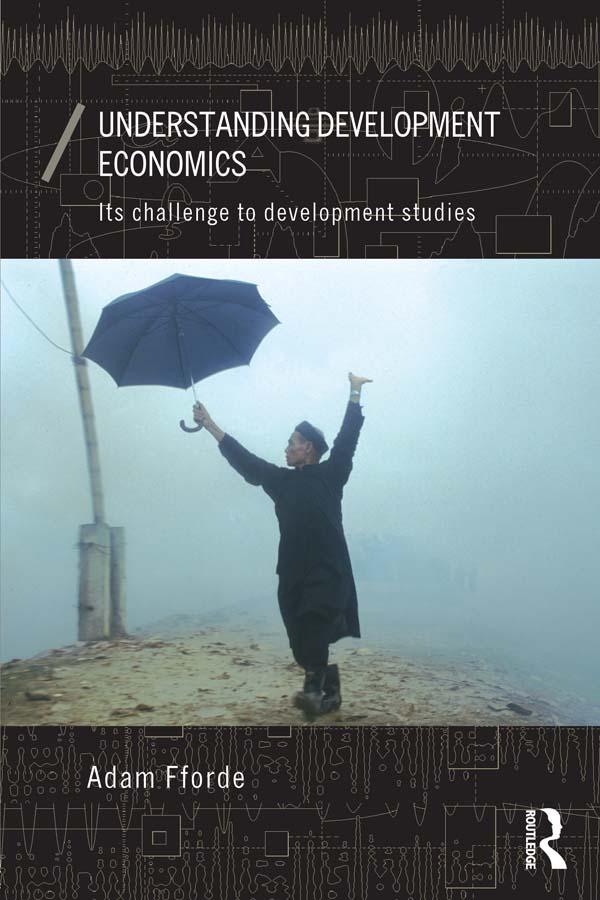
Important parts of development practice, especially in key institutions such as the World Bank, are dominated by economists. In contrast, Development Studies is largely based upon multidisciplinary work in which anthropologists, human geographers, sociologists, and others play important roles. Hence, a tension has arisen between the claims made by Development Economics to be a scientific, measurable discipline prone to wide usage of mathematical modelling, and the more discursive, practice based approach favoured by Development Studies.
The aim of this book is to show how the two disciplines have interacted, as well as how they differ. This is crucial in forming an understanding of development work, and to thinking about why policy recommendations can often lead to severe and continuing problems in developing countries.
This book introduces Development Economics to those coming from two different but linked perspectives; economists and students of development who are not economists. In both explaining and critiquing Development Economics, the book is able to suggest the implications of these findings for Development Studies, and more broadly, for development policy and its outcomes.
Betal enkelt med kort, Klarna, Apple Pay eller Google Pay. Ikke fornøyd? Du har alltid 14 dagers angrerett. Les mer i våre vilkår. Har du spørsmål, send oss en e-post på hello@memmo.org.
Memmo gjør det enklere å studere – uansett hvor du er i verden. Hos oss samler du pensumbøker og smarte studieverktøy på ett og samme sted: sammendrag, quizer, podkaster og flashcards. Og så Ted, din studiekompis som svarer på alt du lurer på. Over 50 000 studenter studerer allerede her – bygget for at du skal lære raskere og stresse mindre.