
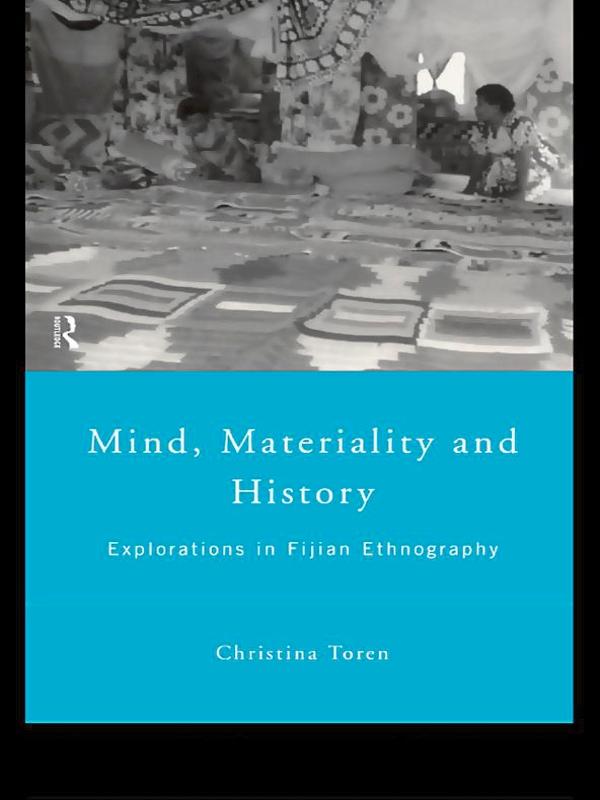
How do we become who we are? How is it that people are so similar in the ways they differ from one another, and so different in the ways they are the same?
Christina Toren's theory of mind as not only a physical phenomenon, but an historical one, sets out to answer these questions by examining how the material world of objects and other people informs the constitution of mind in persons over time.
This theory of embodied mind as a microhistorical process is set out in the first chapter, providing a context for the nine papers that follow. Questions explored include the way meaning-making processes reference an historically specific world and are responsible at once for continuity and change, how ritual informs children's constitution of the categories adults use to describe the world, and how people represent their relationships with one another and in so doing come to embody history.
Mind, Materiality and History has direct relevance to current debates on the nature of mind and consciousness, and demonstrates the centrality of the study of children to social analysis. It will be a valuable resource for students and scholars with an interest in anthropological theory and methodology, as well as those engaged in material culture studies.
Betal enkelt med kort, Klarna, Apple Pay eller Google Pay. Ikke fornøyd? Du har alltid 14 dagers angrerett. Les mer i våre vilkår. Har du spørsmål, send oss en e-post på hello@memmo.org.
Memmo gjør det enklere å studere – uansett hvor du er i verden. Hos oss samler du pensumbøker og smarte studieverktøy på ett og samme sted: sammendrag, quizer, podkaster og flashcards. Og så Ted, din studiekompis som svarer på alt du lurer på. Over 50 000 studenter studerer allerede her – bygget for at du skal lære raskere og stresse mindre.