
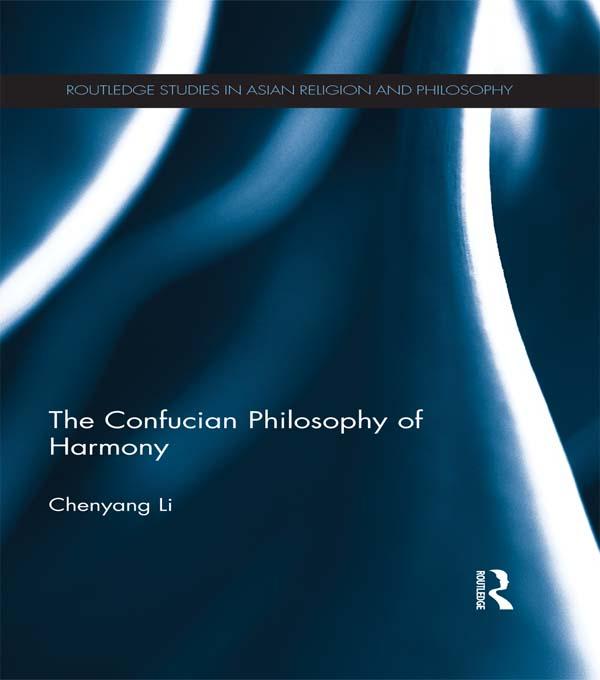
Harmony is a concept essential to Confucianism and to the way of life of past and present people in East Asia. Integrating methods of textual exegesis, historical investigation, comparative analysis, and philosophical argumentation, this book presents a comprehensive treatment of the Confucian philosophy of harmony.
The book traces the roots of the concept to antiquity, examines its subsequent development, and explicates its theoretical and practical significance for the contemporary world. It argues that, contrary to a common view in the West, Confucian harmony is not mere agreement but has to be achieved and maintained with creative tension. Under the influence of a Weberian reading of Confucianism as "adjustment" to a world with an underlying fixed cosmic order, Confucian harmony has been systematically misinterpreted in the West as presupposing an invariable grand scheme of things that pre-exists in the world to which humanity has to conform. The book shows that Confucian harmony is a dynamic, generative process, which seeks to balance and reconcile differences and conflicts through creativity.
Illuminating one of the most important concepts in Chinese philosophy and intellectual history, this book is of interest to students of Chinese studies, history and philosophy in general and eastern philosophy in particular.
Betal enkelt med kort, Klarna, Apple Pay eller Google Pay. Ikke fornøyd? Du har alltid 14 dagers angrerett. Les mer i våre vilkår. Har du spørsmål, send oss en e-post på hello@memmo.org.
Memmo gjør det enklere å studere – uansett hvor du er i verden. Hos oss samler du pensumbøker og smarte studieverktøy på ett og samme sted: sammendrag, quizer, podkaster og flashcards. Og så Ted, din studiekompis som svarer på alt du lurer på. Over 50 000 studenter studerer allerede her – bygget for at du skal lære raskere og stresse mindre.