
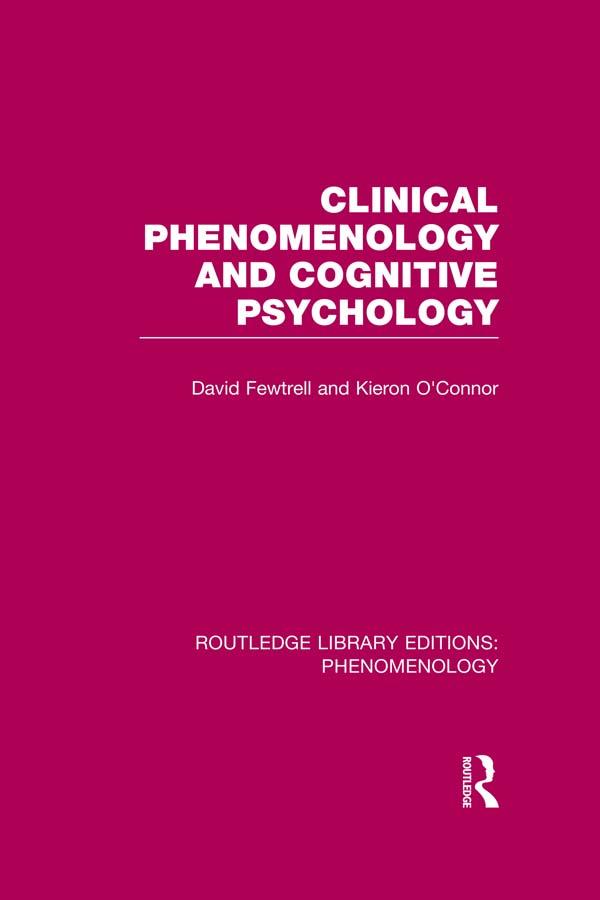
Cognitive therapies are often biased in their assessment of clinical problems by their emphasis on the role of verbally-mediated thought in shaping our emotions, and in stressing the influence of thought upon feeling. Alternatively, a more phenomenological appraisal of psychological dysfunction suggests that emotion and thinking are complementary processes which influence each other.
Cognitive psychology developed out of information-processing models, whereas phenomenological psychology is rooted in a philosophical perspective which avoids the assumptions of positivist methodology. But, despite their different origins, the two disciplines overlap and complement each other. This book, originally published in 1995, illustrates how feeling states are a crucial component of mental health problems and, if adequately differentiated, can result in a greater understanding of mental health.
Betal enkelt med kort, Klarna, Apple Pay eller Google Pay. Ikke fornøyd? Du har alltid 14 dagers angrerett. Les mer i våre vilkår. Har du spørsmål, send oss en e-post på hello@memmo.org.
Memmo gjør det enklere å studere – uansett hvor du er i verden. Hos oss samler du pensumbøker og smarte studieverktøy på ett og samme sted: sammendrag, quizer, podkaster og flashcards. Og så Ted, din studiekompis som svarer på alt du lurer på. Over 50 000 studenter studerer allerede her – bygget for at du skal lære raskere og stresse mindre.