
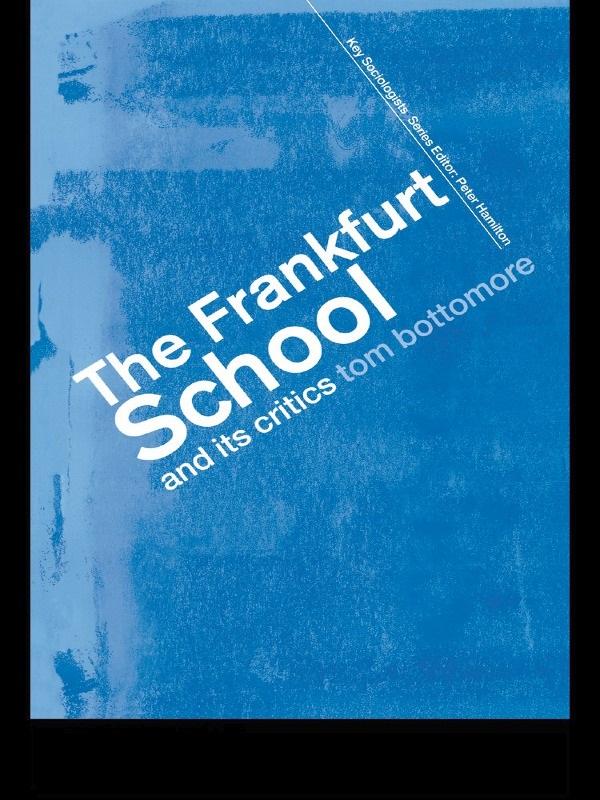
The Institute of Social Research, from which the Frankfurt School developed, was founded in the early years of the Weimar Republic. It survived the Nazi era in exile, to become an important centre of social theory in the postwar era. Early members of the school, such as Adorno, Horkheimer and Marcuse, developed a form of Marxist theory known as Critical Theory, which became influential in the study of class, politics, culture and ideology. The work of more recent members, and in particular Habermas, has received wide attention throughout Europe and North America.
Tom Bottomore's study takes a new and controversial look at the contributions of the Frankfurt School to modern sociology, examining several issues not previously discussed elsewhere. He discusses the neglect of history and political economy by the critical theorists, and considers the relationship of the later Frankfurt School to the radical movements of the 1960s and the present time. His critical analysis makes the school's writers accessible, through an assessment of their work and an exploration of the relationship of Critical Theory to other forms of sociological thought, especially positivism and structuralism.
Betal enkelt med kort, Klarna, Apple Pay eller Google Pay. Ikke fornøyd? Du har alltid 14 dagers angrerett. Les mer i våre vilkår. Har du spørsmål, send oss en e-post på hello@memmo.org.
Memmo gjør det enklere å studere – uansett hvor du er i verden. Hos oss samler du pensumbøker og smarte studieverktøy på ett og samme sted: sammendrag, quizer, podkaster og flashcards. Og så Ted, din studiekompis som svarer på alt du lurer på. Over 50 000 studenter studerer allerede her – bygget for at du skal lære raskere og stresse mindre.
Du vil kanskje også like
Kjøp boken0