
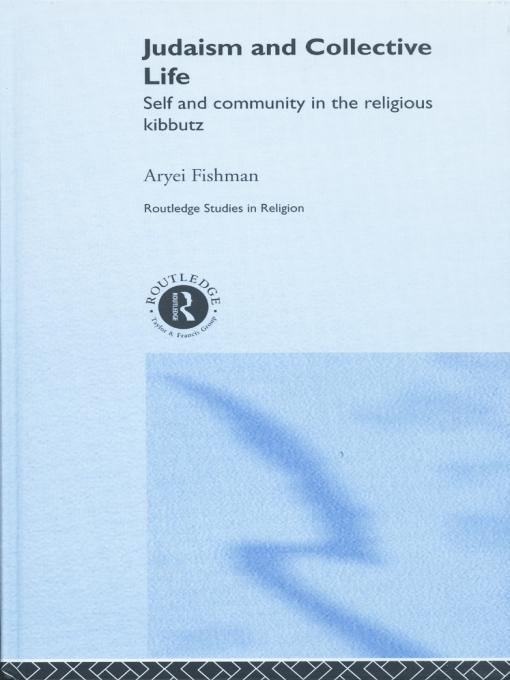
Examining the relationship between Judaism as a religious culture and kibbutz life, this is a ground-breaking work in the research of Judaism.
The book takes as its point of departure the historical fact that it was Orthodox pioneers of German origin, in contrast to their Eastern European counterparts, who successfully developed religious kibbutz life. Employing sociological concepts and methods, the author examines the correlations between two evolutionary phases in kibbutz development and two modes of Judaism: the rational Halakhic and the emotive Hassidic modes. In doing this, he explores the relationship between two diverse dispositions towards the divinity - the transcendent and the immanent - and two diverse modes of the self and their related communities.
This innovative and insightful work will be of essential interest to scholars of the sociology of religion, Jewish studies, modern Jewish history and Israel's national history, and will also interest those more broadly engaged with theology and religious studies.
Betal enkelt med kort, Klarna, Apple Pay eller Google Pay. Ikke fornøyd? Du har alltid 14 dagers angrerett. Les mer i våre vilkår. Har du spørsmål, send oss en e-post på hello@memmo.org.
Memmo gjør det enklere å studere – uansett hvor du er i verden. Hos oss samler du pensumbøker og smarte studieverktøy på ett og samme sted: sammendrag, quizer, podkaster og flashcards. Og så Ted, din studiekompis som svarer på alt du lurer på. Over 50 000 studenter studerer allerede her – bygget for at du skal lære raskere og stresse mindre.
Du vil kanskje også like
Kjøp boken0