
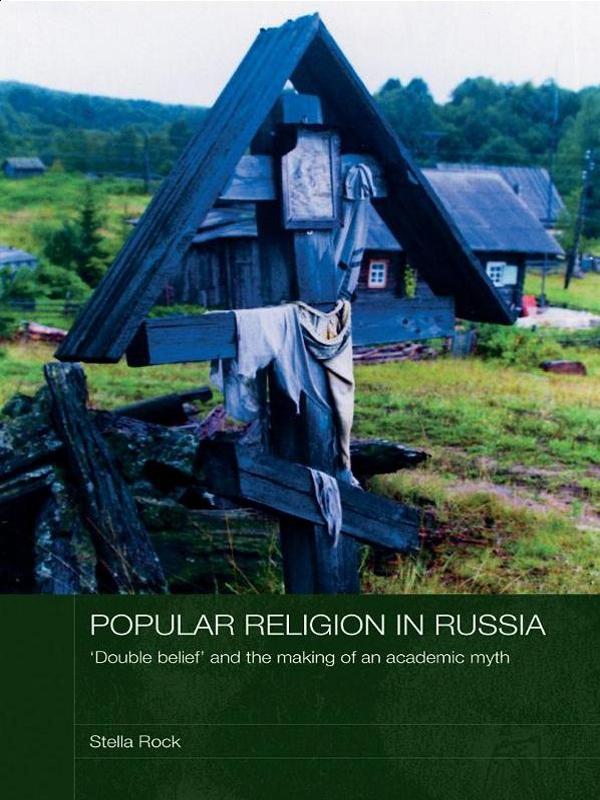
This book dispels the widely-held view that paganism survived in Russia alongside Orthodox Christianity, demonstrating that 'double belief', dvoeverie, is in fact an academic myth.
Scholars, citing the medieval origins of the term, have often portrayed Russian Christianity as uniquely muddied by paganism, with 'double-believing' Christians consciously or unconsciously preserving pagan traditions even into the twentieth century. This volume shows how the concept of dvoeverie arose with nineteenth-century scholars obsessed with the Russian 'folk' and was perpetuated as a propaganda tool in the Soviet period, colouring our perception of both popular faith in Russian and medieval Russian culture for over a century. It surveys the wide variety of uses of the term from the eleventh to the seventeenth century, and contrasts them to its use in modern historiography, concluding that our modern interpretation of dvoeverie would not have been recognized by medieval clerics, and that 'double-belief' is a modern academic construct. Furthermore, it offers a brief foray into medieval Orthodoxy via the mind of the believer, through the language and literature of the period.
Betal enkelt med kort, Klarna, Apple Pay eller Google Pay. Ikke fornøyd? Du har alltid 14 dagers angrerett. Les mer i våre vilkår. Har du spørsmål, send oss en e-post på hello@memmo.org.
Memmo gjør det enklere å studere – uansett hvor du er i verden. Hos oss samler du pensumbøker og smarte studieverktøy på ett og samme sted: sammendrag, quizer, podkaster og flashcards. Og så Ted, din studiekompis som svarer på alt du lurer på. Over 50 000 studenter studerer allerede her – bygget for at du skal lære raskere og stresse mindre.