
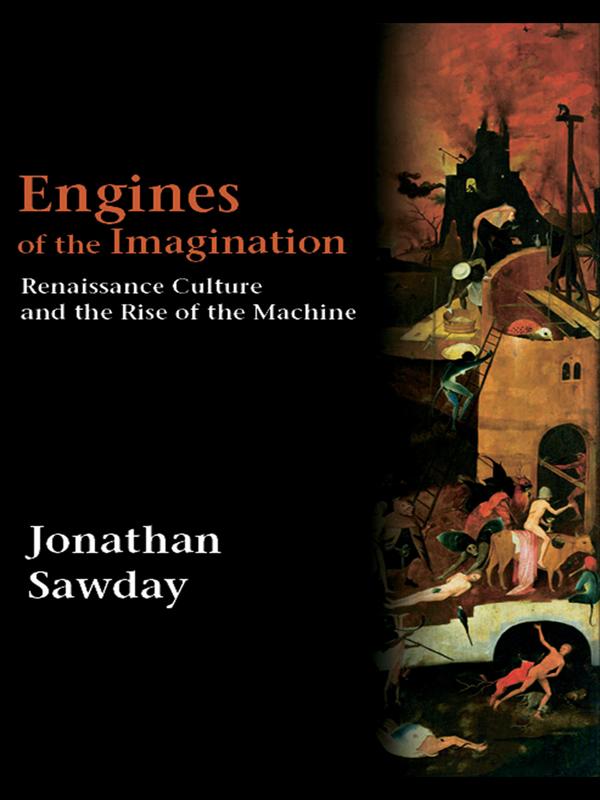
At what point did machines and technology begin to have an impact on the cultural consciousness and imagination of Europe? How was this reflected through the art and literature of the time? Was technology a sign of the fall of humanity from its original state of innocence or a sign of human progress and mastery over the natural world? In his characteristically lucid and captivating style, Jonathan Sawday investigates these questions and more by engaging with the poetry, philosophy, art, and engineering of the period to find the lost world of the machine in the pre-industrial culture of the European Renaissance.
The aesthetic and intellectual dimension of these machines appealed to familiar figures such as Shakespeare, Francis Bacon, Montaigne, and Leonardo da Vinci as well as to a host of lesser known writers and artists in the sixteenth and seventeenth centuries. This intellectual engagement with machines in the European Renaissance gave rise to new attitudes towards gender, work and labour, and even fostered the new sciences of artificial life and reason which would be pursued by figures such as Descartes, Hobbes, and Leibniz in the seventeenth century.
Writers, philosophers and artists had mixed and often conflicting reactions to technology, reflecting a paradoxical attitude between modern progress and traditional values. Underpinning the enthusiastic creation of a machine-driven world, then, were stories of loss and catastrophe. These contradictory attitudes are part of the legacy of the European Renaissance, just as much as the plays of Shakespeare or the poetry of John Milton. And this historical legacy helps to explain many of our own attitudes towards the technology that surrounds us, sustains us, and sometimes perplexes us in the modern world.
Betal enkelt med kort, Klarna, Apple Pay eller Google Pay. Ikke fornøyd? Du har alltid 14 dagers angrerett. Les mer i våre vilkår. Har du spørsmål, send oss en e-post på hello@memmo.org.
Memmo gjør det enklere å studere – uansett hvor du er i verden. Hos oss samler du pensumbøker og smarte studieverktøy på ett og samme sted: sammendrag, quizer, podkaster og flashcards. Og så Ted, din studiekompis som svarer på alt du lurer på. Over 50 000 studenter studerer allerede her – bygget for at du skal lære raskere og stresse mindre.