
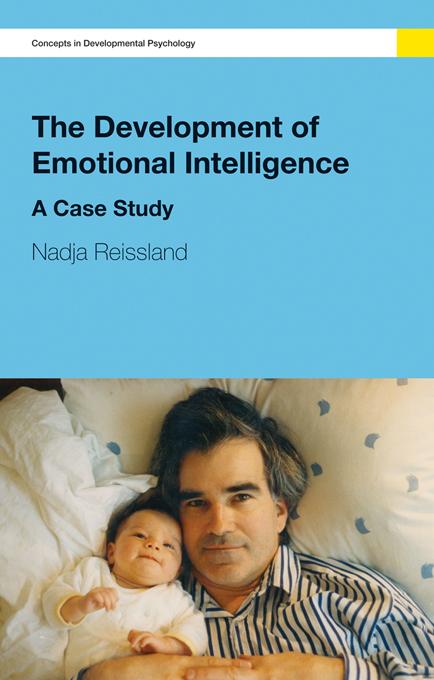
How do children learn about the expression and meaning of emotions – both happy and sad? This book answers questions regarding the foundation of emotional intelligence, and examines how children become emotionally literate as they are socialised into their family environment from birth to 2 years of age. These early stages are vitally important in teaching children to understand themselves and others, as well as how to relate to people, and how to adapt to and cope with their immediate surroundings.
In order to examine the development of emotional intelligence, the author presents an overview of the literature on the subject and in the second part of the book presents a case study in which the concepts introduced in the first part of the book are revisited. Based on daily tape-recorded ‘conversations’ between a baby and her father, the data demonstrate how, over a two-year period, the child learns to express and understand emotions within social interactions. This capacity to reason with emotions is examined through four areas: perceiving emotion, integrating emotion, understanding emotion and managing emotion.
The Development of Emotional Intelligence adds a new perspective to the theoretical debate on emotions and how they develop. It will be of great interest to psychologists and any professionals dealing with families. It will also be helpful reading for parents.
Betal enkelt med kort, Klarna, Apple Pay eller Google Pay. Ikke fornøyd? Du har alltid 14 dagers angrerett. Les mer i våre vilkår. Har du spørsmål, send oss en e-post på hello@memmo.org.
Memmo gjør det enklere å studere – uansett hvor du er i verden. Hos oss samler du pensumbøker og smarte studieverktøy på ett og samme sted: sammendrag, quizer, podkaster og flashcards. Og så Ted, din studiekompis som svarer på alt du lurer på. Over 50 000 studenter studerer allerede her – bygget for at du skal lære raskere og stresse mindre.