
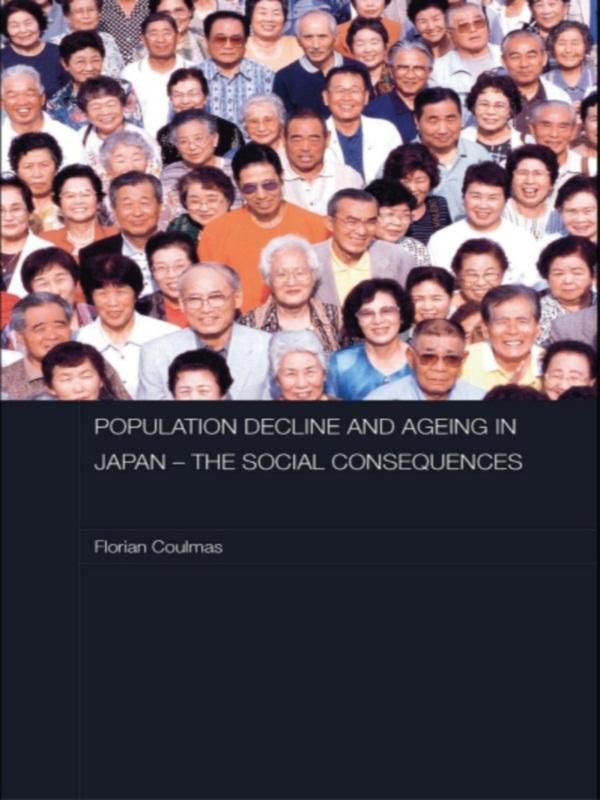
This book presents a comprehensive analysis of one of the most pressing challenges facing Japan today: population decline and ageing.
It argues that social ageing is a phenomenon that follows in the wake of industrialization, urbanization and social modernization, bringing about changes in values, institutions, social structures, economic activity, technology and culture, and posing many challenges for the countries affected. Focusing on the experience of Japan, the author explores:
- how Japan has recognized the emerging problems relatively early because during the past half century population ageing has been more rapid in Japan than in any other country
- how all of Japanese society is affected by social ageing, not just certain substructures and institutions, and explains its complex causes, describes the resulting challenges and analyses the solutions under consideration to deal with it
- the nature of Japan’s population dynamics since 1920, and argues that Japan is rapidly moving in the direction of a ‘hyperaged society’ in which those sixty-five or older account for twenty-five per cent of the total population
- the implications for family structures and other social networks, gender roles and employment patterns, health care and welfare provision, pension systems, immigration policy, consumer and voting behaviour and the cultural reactions and ramifications of social ageing.
Betal enkelt med kort, Klarna, Apple Pay eller Google Pay. Ikke fornøyd? Du har alltid 14 dagers angrerett. Les mer i våre vilkår. Har du spørsmål, send oss en e-post på hello@memmo.org.
Memmo gjør det enklere å studere – uansett hvor du er i verden. Hos oss samler du pensumbøker og smarte studieverktøy på ett og samme sted: sammendrag, quizer, podkaster og flashcards. Og så Ted, din studiekompis som svarer på alt du lurer på. Over 50 000 studenter studerer allerede her – bygget for at du skal lære raskere og stresse mindre.