
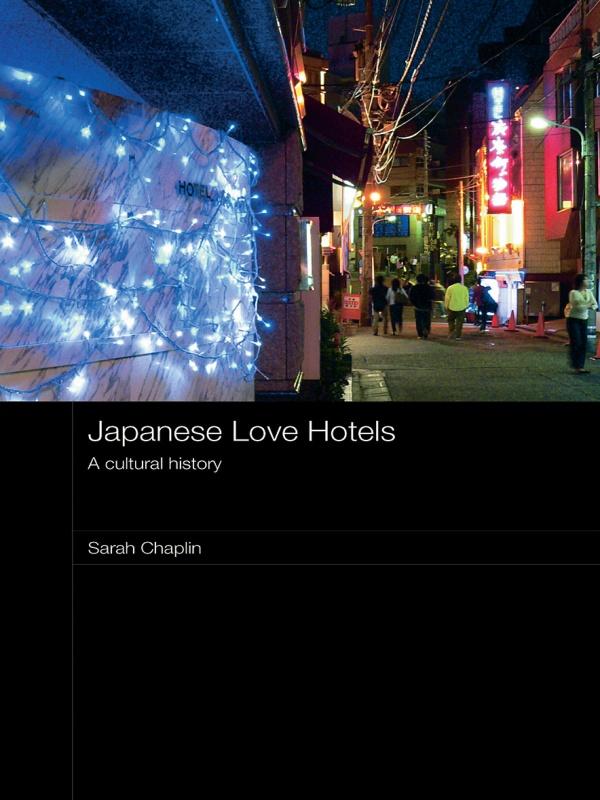
Drawing on theories of place, consumption and identity, Sarah Chaplin details the evolution of the love hotel in urban Japan since the 1950s. Love hotels emerged in the late 1950s following a ban of licensed prostitution, then were extremely popular in the 1970s, were then legislated against in the 1980s and are now perceived as ‘leisure’, ‘fashion’ or ‘boutique’ hotels.
Representing a timely opportunity to capture and evaluate the dying manifestations of an important era in Japanese social and cultural history, this book provides a critical account of the love hotel as a unique typology. It considers its spatial, aesthetic, semiotic, and locational denotations and connotations, which results in a richly nuanced cultural reading.
The love hotel is presented as a key indicator of social and cultural change in post-war Japan, and as such this book will be of interest to a wide and international readership including students of Japanese culture, society and architecture.
Betal enkelt med kort, Klarna, Apple Pay eller Google Pay. Ikke fornøyd? Du har alltid 14 dagers angrerett. Les mer i våre vilkår. Har du spørsmål, send oss en e-post på hello@memmo.org.
Memmo gjør det enklere å studere – uansett hvor du er i verden. Hos oss samler du pensumbøker og smarte studieverktøy på ett og samme sted: sammendrag, quizer, podkaster og flashcards. Og så Ted, din studiekompis som svarer på alt du lurer på. Over 50 000 studenter studerer allerede her – bygget for at du skal lære raskere og stresse mindre.