
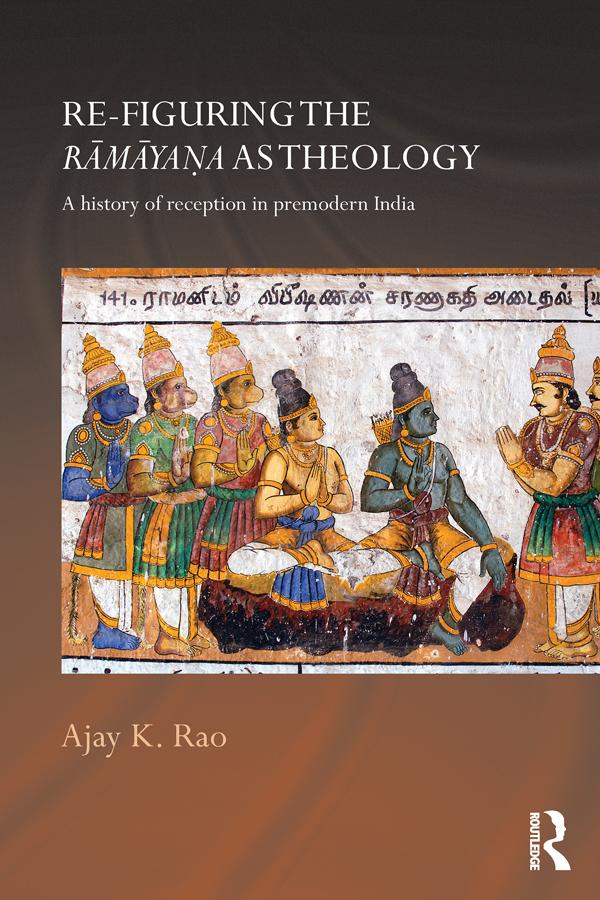
The Rāmāyana of Vālmīki is considered by many contemporary Hindus to be a foundational religious text. But this understanding is in part the result of a transformation of the epic’s receptive history, a hermeneutic project which challenged one characterization of the genre of the text, as a work of literary culture, and replaced it with another, as a work of remembered tradition.
This book examines Rāmāyana commentaries, poetic retellings, and praise-poems produced by intellectuals within the Śrīvaisnava order of South India from 1250 to 1600 and shows how these intellectuals reconceptualized Rāma’s story through the lens of their devotional metaphysics. Śrīvaisnavas applied innovative interpretive techniques to the Rāmāyana, including allegorical reading, ślesa reading (reading a verse as a double entendre), and the application of vernacular performance techniques such as word play, improvisation, repetition, and novel forms of citation. The book is of interest not only to Rāmāyana specialists but also to those engaged with Indian intellectual history, literary studies, and the history of religions.
Betal enkelt med kort, Klarna, Apple Pay eller Google Pay. Ikke fornøyd? Du har alltid 14 dagers angrerett. Les mer i våre vilkår. Har du spørsmål, send oss en e-post på hello@memmo.org.
Memmo gjør det enklere å studere – uansett hvor du er i verden. Hos oss samler du pensumbøker og smarte studieverktøy på ett og samme sted: sammendrag, quizer, podkaster og flashcards. Og så Ted, din studiekompis som svarer på alt du lurer på. Over 50 000 studenter studerer allerede her – bygget for at du skal lære raskere og stresse mindre.