
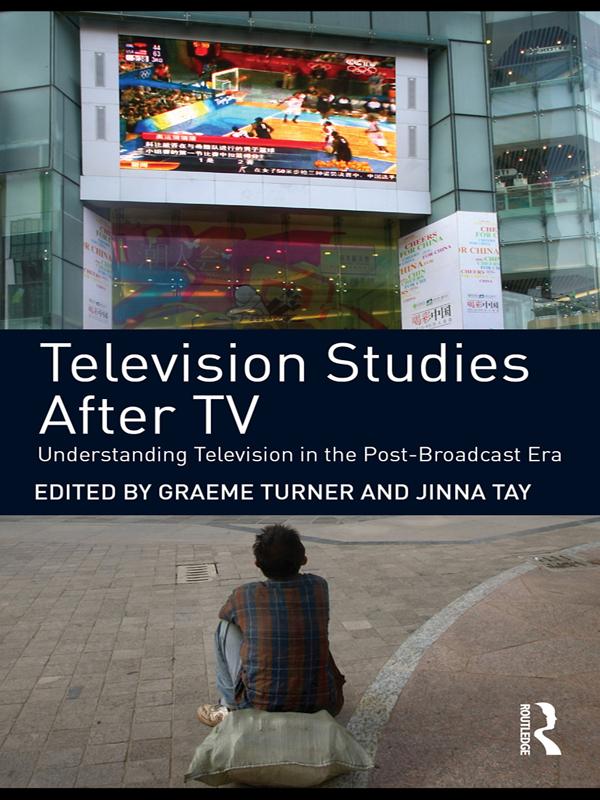
Television studies must now address a complex environment where change has been vigorous but uneven, and where local and national conditions vary significantly. Globalizing media industries, deregulatory policy regimes, the multiplication, convergence and trade in media formats, the emergence of new content production industries outside the US/UK umbrella, and the fragmentation of media audiences are all changing the nature of television today: its content, its industrial structure and how it is consumed.
Television Studies after TV leads the way in developing new ways of understanding television in the post-broadcast era. With contributions from leading international scholars, it considers the full range of convergent media now implicated in understanding television, and also focuses on large non-Anglophone markets – such as Asia and Latin America — in order to accurately reflect the wide variety of structures, forms and content which now organise television around the world.
Betal enkelt med kort, Klarna, Apple Pay eller Google Pay. Ikke fornøyd? Du har alltid 14 dagers angrerett. Les mer i våre vilkår. Har du spørsmål, send oss en e-post på hello@memmo.org.
Memmo gjør det enklere å studere – uansett hvor du er i verden. Hos oss samler du pensumbøker og smarte studieverktøy på ett og samme sted: sammendrag, quizer, podkaster og flashcards. Og så Ted, din studiekompis som svarer på alt du lurer på. Over 50 000 studenter studerer allerede her – bygget for at du skal lære raskere og stresse mindre.