
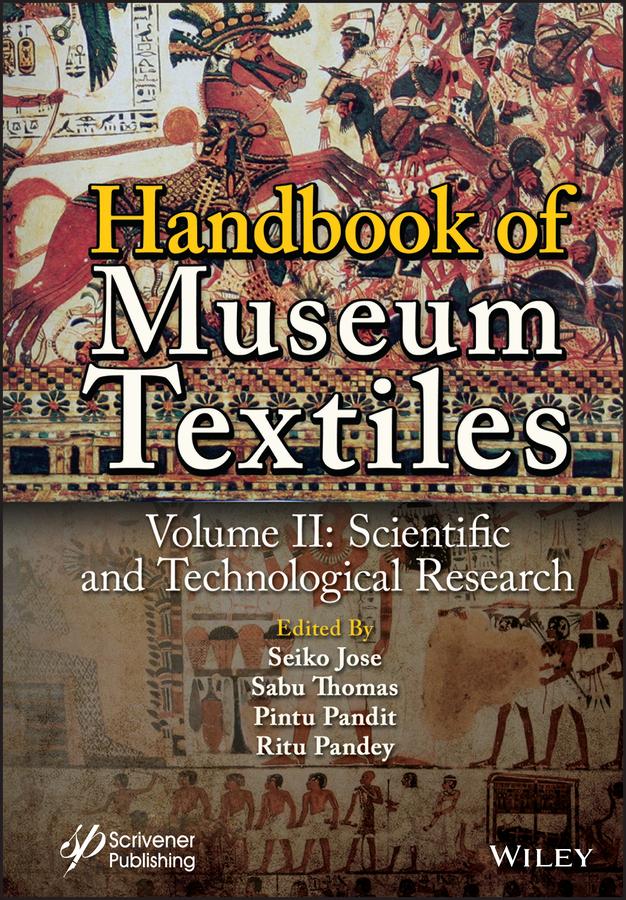
Textiles have been known to us throughout human history and played a vital role in the lives and traditions of people. Clothing was made by using different materials and methods from natural fibers. There are different varieties of textiles, out of which certain traditional textiles, archaeological findings, or fragments are of cultural, historical, and sentimental value such as tapestries, embroideries, flags, shawls, etc. These kinds of textiles, due to their historical use and environmental factors, require special attention to guarantee their long-term stability. Textile conservation is a complex, challenging, and multi-faceted discipline and it is one of the most versatile branches of conservation.
Volume II of the Handbook of Museum Textiles provides precise instruction for conservation techniques to preserve the textile heritage more scientifically and technologically. Additionally, the book covers the most modern techniques used to characterize archaeological textiles and dyes. Progress and innovation in nanotechnology-based interventions in museum textiles are emphasized. Chapters cover the general introduction to biological damage caused by physical and chemical agents and their prevention methods. Information on microscopy and characterization of historical textiles, ancient dyes, and prints is highlighted. Several aspects of assessment of degradation, repair, and stabilization of antique textiles are presented in depth. Experimental research methods for diagnosis and scientific study of fibers and natural dyes using LC-MS and UV-VIS are described. Practical knowledge based on analysis and visualization of historical textiles for the needs of museum conservation, exhibition, digital technology, and virtual museums is addressed as well.
Audience
It will serve as an educational asset and tool for researchers, art scholars, archaeologists, museum curators, and those who are interested in the field of traditional or historic textile collections.
Betal enkelt med kort, Klarna, Apple Pay eller Google Pay. Ikke fornøyd? Du har alltid 14 dagers angrerett. Les mer i våre vilkår. Har du spørsmål, send oss en e-post på hello@memmo.org.
Memmo gjør det enklere å studere – uansett hvor du er i verden. Hos oss samler du pensumbøker og smarte studieverktøy på ett og samme sted: sammendrag, quizer, podkaster og flashcards. Og så Ted, din studiekompis som svarer på alt du lurer på. Over 50 000 studenter studerer allerede her – bygget for at du skal lære raskere og stresse mindre.