
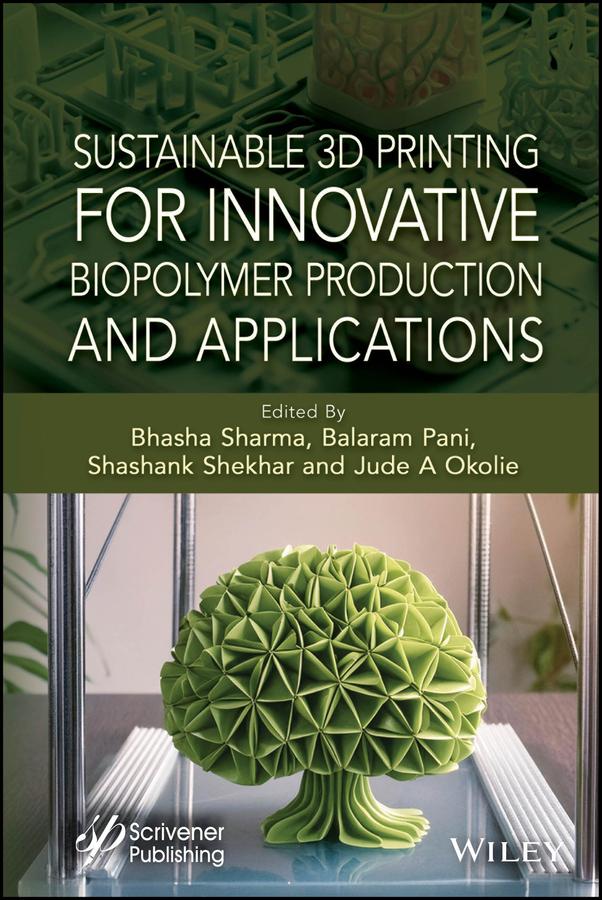
This book highlights 3D-printed biopolymers' advancements and sustainability, exploring cutting-edge research and real-world applications.
Biopolymers have garnered global interest due to environmental concerns and are widely utilized in applications such as biomedicine, food, textiles, and cosmetics. Techniques like 3D printing have been extensively studied to fabricate reliable and efficient products, particularly in tissue engineering. These techniques enable the production of materials with complex structures and diverse functional groups.
The book provides a comprehensive account of contemporary advancements in 3D-printed biopolymers, emphasizing their role in promoting sustainability and supporting the circular economy. Featuring meticulously curated chapters by leading scientists, it integrates diverse disciplines, including green biopolymers, nanotechnology, functionalization techniques, and material synthesis, offering a holistic understanding of the field. Several chapters delve into 3D printing processing techniques and their applications in areas such as water purification, energy storage, and biomedical advancements. Additionally, the book addresses progress in biopolymer technology, exploring its challenges and future prospects.
Audience
This book is ideal for industrial manufacturers, environmental chemists, materials and biopolymer scientists, and researchers in industries such as biomedicine, food, textiles, packaging, and cosmetics.
Betal enkelt med kort, Klarna, Apple Pay eller Google Pay. Ikke fornøyd? Du har alltid 14 dagers angrerett. Les mer i våre vilkår. Har du spørsmål, send oss en e-post på hello@memmo.org.
Memmo gjør det enklere å studere – uansett hvor du er i verden. Hos oss samler du pensumbøker og smarte studieverktøy på ett og samme sted: sammendrag, quizer, podkaster og flashcards. Og så Ted, din studiekompis som svarer på alt du lurer på. Over 50 000 studenter studerer allerede her – bygget for at du skal lære raskere og stresse mindre.