
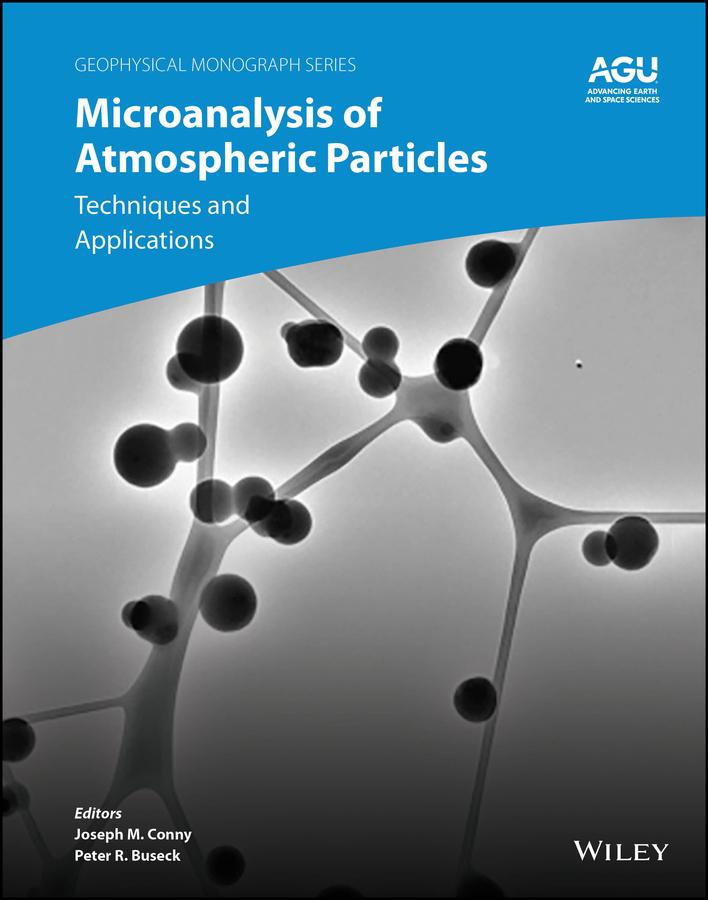
Studying atmospheric particles from a microscopic perspective
Most of what is visible in the atmosphere—such as pollution, dust, haze, fog, and clouds—is due to micrometer- and nanometer-sized aerosol particles. It is important to understand the source, characteristics, and behavior of these small particles as they play a fundamental role in large-scale atmospheric processes.
Microanalysis of Atmospheric Particles: Techniques and Applications presents different microscopic techniques for studying aerosols and explores a range of applications in climate studies and air quality studies.
Volume highlights include:
- Overview of different techniques and applications
- In-depth descriptions of scanning electron microscopy, transmission electron microscopy, electron energy loss spectroscopy, Raman microspectroscopy, and atomic force microscopy
- Techniques for studying physical characteristics and chemical composition
- Methods to examine particle transformation
- Examples including soot, organic aerosols, ice crystals, and sea spray
- Applications for global and regional climate change and urban air quality
The American Geophysical Union promotes discovery in Earth and space science for the benefit of humanity. Its publications disseminate scientific knowledge and provide resources for researchers, students, and professionals.
Betal enkelt med kort, Klarna, Apple Pay eller Google Pay. Ikke fornøyd? Du har alltid 14 dagers angrerett. Les mer i våre vilkår. Har du spørsmål, send oss en e-post på hello@memmo.org.
Memmo gjør det enklere å studere – uansett hvor du er i verden. Hos oss samler du pensumbøker og smarte studieverktøy på ett og samme sted: sammendrag, quizer, podkaster og flashcards. Og så Ted, din studiekompis som svarer på alt du lurer på. Over 50 000 studenter studerer allerede her – bygget for at du skal lære raskere og stresse mindre.